
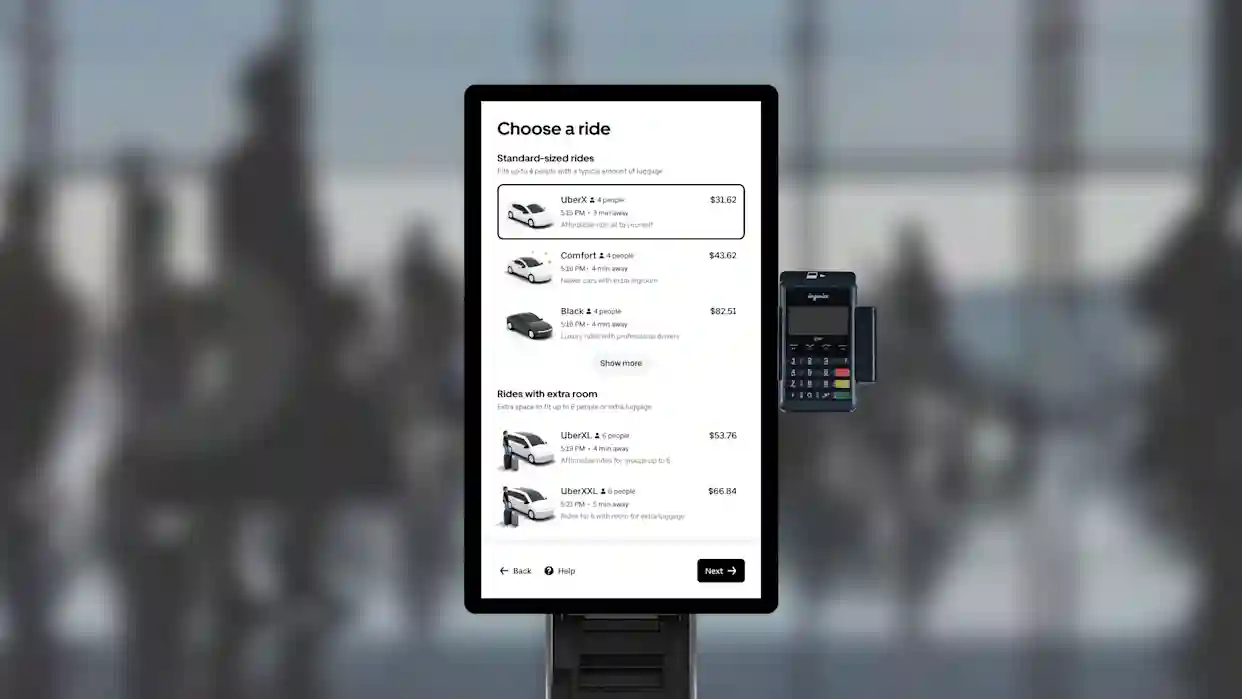
Uber launches physical kiosks enabling travelers to book rideshares without smartphones, targeting international visitors lacking data plans and passengers with dead batteries. Users input destinations and ride preferences at self-service terminals, receiving printed receipts with driver details, ETAs, and QR codes for boarding. The initiative debuts in New York’s LaGuardia Terminal C, with rapid expansion planned for major airports, hotels, and cruise ports nationwide.
Solving Real-World Travel Pain Points
Kiosks eliminate common barriers: no app downloads, no WiFi dependency, no payment method linking. International tourists scan passports for instant verification; locals enter phone numbers or emails for receipt delivery. Real-time displays show wait times across UberX, Comfort, Black, and shuttle options, empowering price/wait comparisons against traditional taxis.
Printed receipts include driver names, license plates, vehicle descriptions, and scannable QR codes for contactless hailing. Environmentally conscious paper uses recycled stock with soy ink; digital receipts available via linked email. Kiosks feature multilingual interfaces (15+ languages) and accessibility options like voice guidance and large-print displays.
Airport Competition with Traditional Taxis
Positioned near taxi stands, kiosks create direct visual rivalry—passengers compare flat-rate cabs against dynamic Uber pricing with live wait times. Uber claims average 20-30% cost savings during peak hours when taxi surcharges apply. Shuttle integration displays $18 fixed-price Manhattan routes alongside premium options.
Newark Liberty International joins LaGuardia and JFK with Uber shuttles, completing NYC airport coverage. Fixed $18 fares eliminate surge pricing uncertainty, appealing to budget travelers and groups splitting costs.
Uber’s High-Traffic Location Strategy
| Location Type | Rationale | Rollout Timeline |
|---|---|---|
| Major Airports | Peak traveler frustration | Q4 2025 – Q1 2026 |
| Luxury Hotels | Concierge replacement | Q1 2026 |
| Cruise Ports | Group transport needs | Q2 2026 |
| Train Stations | Commuter convenience | Q3 2026 |
Shuttle Service Completes NYC Airport Coverage
Uber’s fixed-fare shuttles now serve all three major NYC airports: $18 LaGuardia-Manhattan (launched Oct 2024), JFK expansion (March 2025), and today’s Newark debut. 25-passenger vehicles run every 15-30 minutes during peak hours, accepting kiosk bookings alongside app reservations. Real-time capacity displays prevent overcrowding.
Shuttles target airport employees, families with luggage, and cost-conscious travelers avoiding surge-priced Ubers and metered taxis. Multiple Manhattan drop-offs (Penn Station, Grand Central, Port Authority) maximize convenience.
Using Uber Kiosks Step-by-Step
- Locate blue Uber kiosk near exits or taxi stands.
- Select language and scan passport or enter phone/email.
- Input destination using voice/address search.
- Choose ride type (UberX, Comfort, Black, Shuttle).
- Review price, wait time, and vehicle details.
- Pay via card reader, Apple Pay, or cash (select locations).
- Receive printed receipt with driver info and QR code.
- Scan QR at designated pickup zone for driver notification.
Strategic Business Implications
Kiosks attack Uber’s app dependency, capturing 10-15% of airport rides currently lost to taxis and competitors. International expansion targets 500 million annual US visitors; hotel/port deployments serve business travelers avoiding corporate app restrictions. Data collection via kiosks (anonymous destinations, peak times) informs route optimization without privacy concerns.
Shuttle dominance erodes taxi monopolies at fixed $18 fares—unsurpassable during surge periods. Kiosk-shuttle integration creates seamless ecosystem: spot capacity, book instantly, board within minutes. Physical presence normalizes Uber as infrastructure, not just an app.
Rollout timing coincides with holiday travel peaks and CES 2026 announcements. Success metrics: kiosk utilization rates, shuttle load factors, taxi market share erosion. Uber bets physical touchpoints recapture app-averse demographics while reinforcing digital leadership—one printed receipt at a time.