
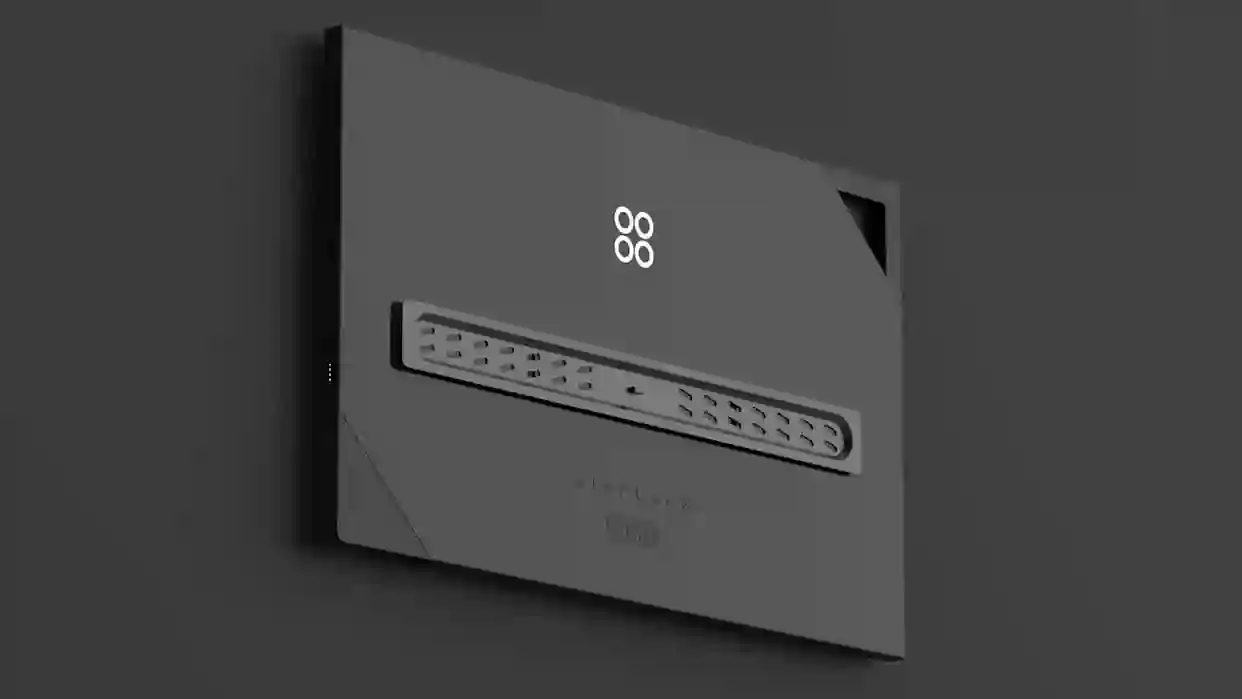
Displace is pushing the boundaries of wireless television technology with its latest innovation at CES 2026: the Displace Hub, a sophisticated wall-mounting system designed to transform any standard TV into a truly cable-free smart display. Building on the company’s earlier success with suction-mounted, battery-powered TVs introduced in 2023, the Hub extends this wireless vision to existing screens, eliminating the clutter of power cords and HDMI cables that plague traditional setups. By integrating advanced mounting tech, onboard computing power, and substantial battery life, Displace aims to redefine home entertainment, making wall-mounted TVs as seamless and portable as modern tablets or laptops.
At its core, the Displace Hub employs the company’s proprietary “active-loop suction” technology, proven in prior models, to securely adhere TVs weighing up to 150 pounds directly to walls without drilling or permanent fixtures. This system supports screens from 55 to 100 inches, covering most living room displays while accommodating larger formats for immersive viewing. Powering the setup is a robust 15,000mAh rechargeable battery capable of delivering five to 10 hours of continuous operation, depending on screen size, brightness, and content demands. Users can recharge the Hub while the TV remains mounted, preserving the wireless aesthetic, though frequent plugging in could somewhat undermine the convenience for heavy users.
What elevates the Hub beyond a simple mount is its embedded computing platform. Equipped with an Intel N-150 4-core processor, integrated GPU, 16GB of RAM, and 128GB of storage, it runs Displace’s custom ambient computing OS, turning any compatible TV into a smart hub for streaming, apps, and ambient information displays. Dual HDMI inputs allow seamless connection of external devices like gaming consoles or Blu-ray players, while compatibility with the Displace Controller 2.0 adds a secondary touchscreen for controls, notifications, or mirrored content. This all-in-one design positions the Hub as a versatile media center, rivaling dedicated smart TV platforms without requiring screen replacement.
While promising, the Hub introduces practical considerations that potential buyers must weigh. Battery runtime, though impressive for untethered operation, may necessitate daily recharges for binge-watchers or sports fans, potentially reintroducing cable management hassles. Size and weight restrictions exclude smaller bedroom TVs or ultra-premium miniscreens, limiting universal appeal. Installation requires a smooth, non-porous wall surface for optimal suction, and repositioning demands careful handling to avoid surface damage. Priced at $1,900 upon launch—with pre-orders opening during CES 2026 from January 6-9—the Hub targets affluent early adopters rather than budget-conscious consumers.
### Wireless TV Innovations Compared
Displace’s approach contrasts with competitors’ half-measures, prioritizing total cable elimination over partial solutions.
This comparison highlights Displace’s unique full-wireless ambition, though at accessible pricing relative to high-end rivals.
### Ideal Use Cases for Displace Hub
The Hub shines in scenarios demanding flexibility and minimalism:
– Rental properties or temporary homes where wall damage is prohibited.
– Multi-room setups for easy TV relocation without rewiring.
– Ambient displays for art, photos, or smart home dashboards when idle.
– Events or gatherings needing quick, large-screen projections.
### Setup and Optimization Tips
– Select flat, clean walls (glass, metal, or painted drywall) for maximum suction grip.
– Balance TV weight distribution using included stabilizers for larger screens.
– Calibrate battery usage via app settings: lower brightness and disable auto-updates during viewing.
– Pair with low-power modes for extended standby as digital signage.
– Test recharge cycles monthly to maintain battery health over time.
### Broader Impact on Home Tech
Displace’s CES showcase underscores a shift toward modular, wireless displays in smart homes. As batteries improve and suction tech matures, expect mainstream adoption challenging fixed-wall conventions. Integration with ecosystems like Matter or HomeKit could amplify appeal, enabling voice-controlled mounting and content switching. Challenges remain—regulatory hurdles for battery safety, competition from OLED flexibility, and scaling production—but success could spawn an accessory market for retrofitting legacy TVs.
For CES attendees and early pre-orderers, the Hub represents tangible progress toward cable-free utopia. At $1,900, it democratizes premium wireless features, bridging consumer TVs with commercial display tech. Whether it disrupts living rooms or remains a niche gadget, Displace continues proving that innovation can make everyday screens extraordinary.