
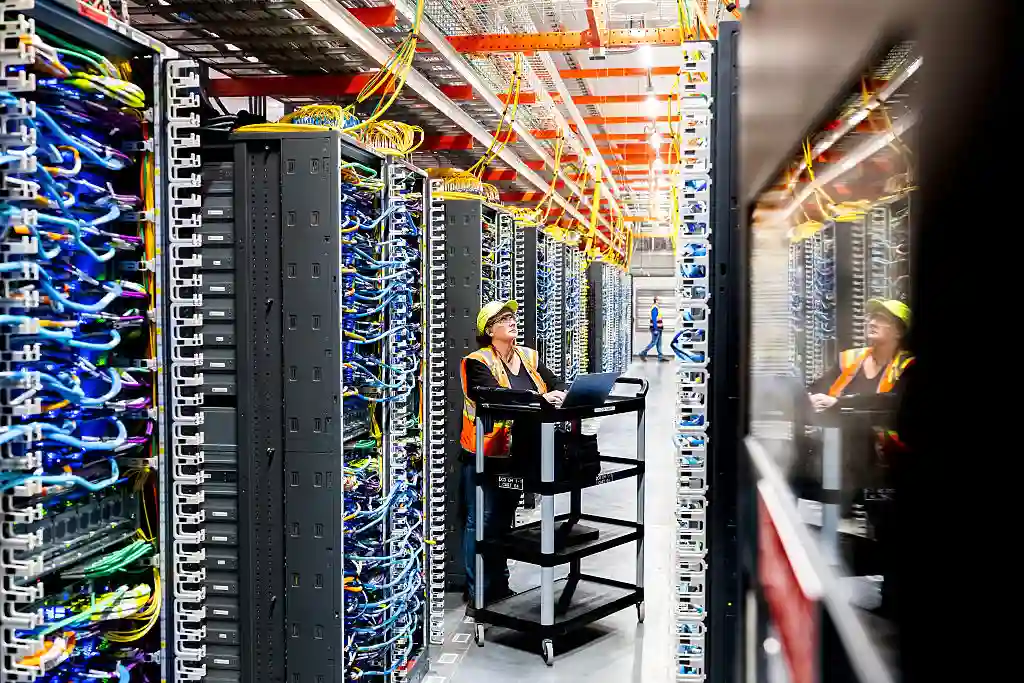
US Senators have launched a forceful investigation into major tech companies, demanding transparency on how their massive data center expansions are driving up electricity bills for ordinary Americans in communities already facing skyrocketing energy costs. In pointed letters to Amazon, Google, Meta, Microsoft, Equinix, Digital Realty, and CoreWeave, Senators Elizabeth Warren, Chris Van Hollen, and Richard Blumenthal highlighted a study showing electricity prices surging as much as 267 percent over five years in areas with heavy data center activity. These facilities consume power equivalent to entire cities, forcing utilities to build expensive new infrastructure that gets passed directly onto residential customers through higher rates, often without local residents even knowing the projects exist due to secretive dealmaking.
The senators detailed troubling tactics employed by tech firms to obscure their involvement, including non-disclosure agreements that silence public officials and landowners, along with shell companies masking true ownership behind vague descriptions of “industrial developments” by anonymous Fortune 100 corporations. In high-density states like Virginia, average electricity prices could climb another 25 percent by 2030, with interconnected power grids spreading the burden to neighboring states. Critics argue the current “socialized” utility model—where all customers share infrastructure costs—was never designed for single hyperscale consumers devouring energy on a municipal scale. Tech companies publicly pledge to shield residential rates while lobbying aggressively against reforms that would make them pay upfront or enter separate rate classes.
Specific examples underscore the hypocrisy. Amazon claims it covers all costs to prevent pass-throughs yet belongs to the Data Center Coalition opposing upfront payment mandates. Google executives have labeled separate data center rate classes “discriminatory” despite their disproportionate grid strain. Reports reveal tech giants securing discounted energy rates as utilities compete fiercely for business, leaving households to subsidize the AI boom. The probe demands detailed responses by January 12, 2026, including internal projections of energy consumption through 2030, impact analyses on regional utility costs, lobbying expenditures, and all tax incentives or subsidies received from state and local governments.
This scrutiny arrives amid growing alarm over abandoned projects where tech firms walk away after utilities invest billions in grid upgrades, saddling ratepayers with stranded costs. Senators warn that overhyped AI demand could falter if enterprise adoption stalls, capabilities plateau, or efficiency breakthroughs reduce power needs, leaving communities with massive debts and no offsetting revenue. States like Utah, Oregon, and Ohio have enacted laws creating dedicated data center customer classes with upfront payments and extended contracts, while Virginia considers similar measures. A Lawrence Berkeley National Laboratory study suggests data centers might occasionally dilute costs through load growth, but near-term spikes remain likely as AI infrastructure explodes.
The bipartisan frustration reflects broader tensions between technological ambition and equitable energy policy. Tech lobbying portrays rate reforms as anti-innovation, yet experts like Harvard’s Ari Peskoe