
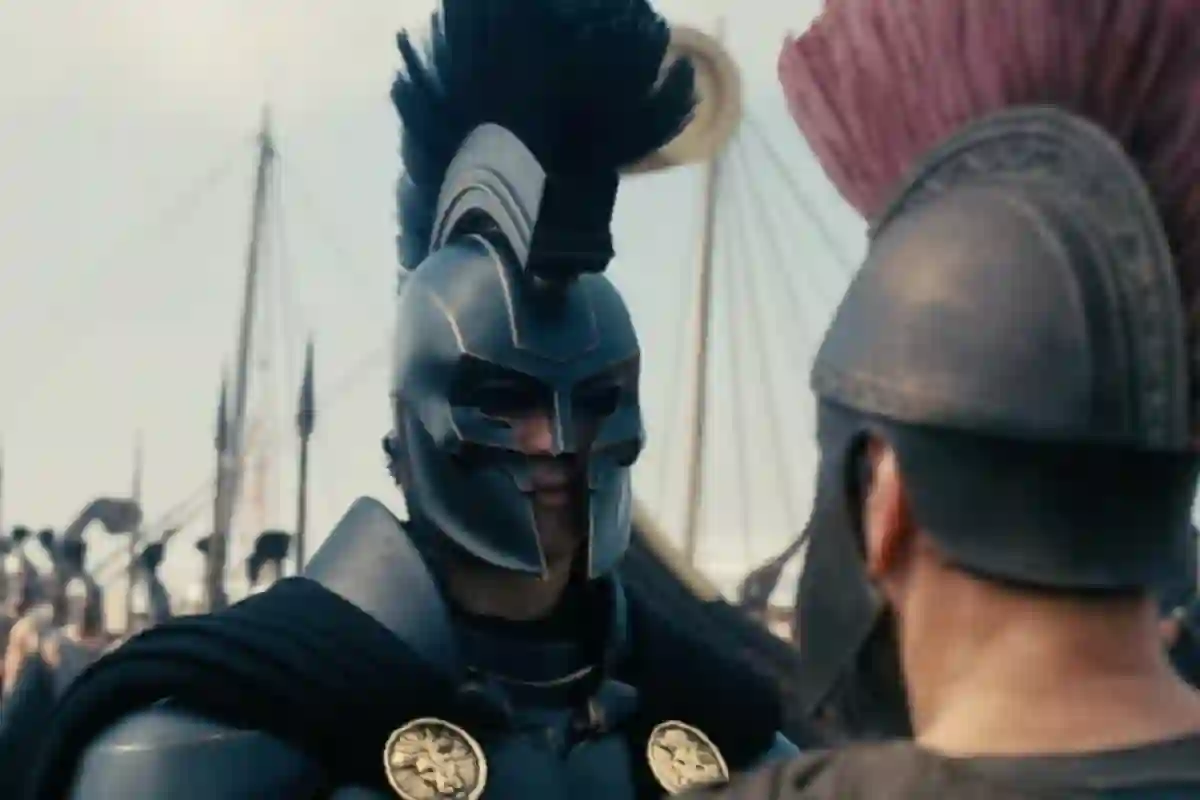
Director Christopher Nolan, riding high from his dual Oscar victories for the groundbreaking 2023 film Oppenheimer, has once again stunned Hollywood by selecting Homer’s immortal epic The Odyssey as his next cinematic endeavor. Universal Pictures has just dropped the electrifying first official trailer for The Odyssey, slated to storm theaters on July 17, 2026, with Matt Damon commanding the screen as the cunning King Odysseus of Ithaca. This ambitious adaptation fuses Nolan’s masterful storytelling—renowned for its intricate narratives and visual splendor—with the raw, mythic power of ancient Greece, promising an odyssey that transcends time and redefines epic filmmaking for a new era.
At its core, the tale chronicles Odysseus’s grueling ten-year quest homeward after the Trojan War’s fall of Troy, glimpsed dramatically in the trailer via the legendary wooden horse. Beset by divine wrath and monstrous foes, he battles the man-eating Cyclops Polyphemus, navigates the deadly allure of the Sirens, and contends with the transformative enchantress Circe, all while his crew dwindles amid tempests and temptations. In Ithaca, Penelope masterfully thwarts a swarm of brazen suitors coveting her bed and throne, weaving her legendary shroud as a ploy for time. Their son Telemachus, restless for his father’s return, embarks on his own journey of discovery, intertwining father-son fates in a tapestry of loyalty, revenge, and homecoming that has captivated humanity for millennia.
Nolan’s Profound Personal Connection
Nolan’s passion for The Odyssey ignited in childhood, around age five or six, during a school play where he witnessed Odysseus lashed to the mast against the Sirens’ hypnotic call—a scene etched indelibly in his memory. He reflects on the epic’s ubiquity in culture, asserting that nearly every film, including his own masterpieces like Inception and Dunkirk, draws from its archetypal wellsprings of heroism, deception, and the inexorable pull of destiny. Adapting it now marks a full-circle triumph, allowing Nolan to dissect the text’s layers: Odysseus as flawed everyman, strategist supreme, whose trials mirror universal struggles against chaos and the unknown.
The trailer dazzles with Nolan’s hallmark IMAX grandeur—roiling oceans, colossal beasts rendered in photorealistic CGI blended with practical effects, and visceral combat that pulses with tension. A booming orchestral score, likely from Ludwig Göransson, amplifies the mythic stakes, while subtle Nolan flourishes hint at temporal manipulations and philosophical undercurrents elevating the legend beyond mere adventure. This isn’t sword-and-sandal bombast; it’s a cerebral plunge into mortality, identity, and the gods’ capricious games, tailored for audiences weaned on Marvel spectacles yet craving substance.
Ensemble Cast of Titans
Matt Damon anchors the ensemble as Odysseus, channeling the character’s roguish intellect and unyielding grit, a role tailor-made for his everyman charisma seen in The Bourne Identity. Anne Hathaway embodies Penelope’s fierce devotion and shrewdness, a queen holding empire against invasion. Tom Holland infuses youthful vigor into Telemachus, the heir awakening to legacy. Robert Pattinson broods menacingly as suitor Antinous, prime target for Odysseus’s wrath, while Jon Bernthal’s rugged Menelaus and Benny Safdie’s authoritative Agamemnon evoke the Trojan victors’ haunted glory. John Leguizamo lends warmth as faithful Eumaeus, Himesh Patel reliability as Eurylochus, with Will Yun Lee, Jimmy Gonzales, and Mia Goth fleshing out the crew and court intrigue.
Gods descend in star power: Zendaya as the owl-eyed Athena, Odysseus’s divine patron weaving fate’s threads; Charlize Theron as the beguiling Circe, mistress of potions and pigs; and Lupita Nyong’o in a shrouded yet magnetic role ripe for revelation. This constellation not only packs A-list allure but mirrors the epic’s diverse tapestry, promising performances that humanize immortals and monsters alike, delving into power dynamics, gender roles, and moral grayness with Nolan’s precision.
Lasting Echoes and Cinematic Revolution
Homer’s Odyssey pulses through history—from Virgil’s Aeneid to Joyce’s modernist stream-of-consciousness, Tennyson’s verse to Coen Brothers’ folk odyssey—shaping quests in Star Wars, The Lord of the Rings, and beyond. Nolan’s iteration arrives amid a renaissance for thoughtful blockbusters, dissecting nostos (homecoming) in our fractured age of migration and isolation. Fan theories explode online: Cyclops cave as Tenet-inspired mindbender? Suitors’ banquet foreshadowing quantum revenge? The trailer’s cryptic frames fuel speculation, cementing its viral grip.
Production whispers reveal Mediterranean shoots for authenticity, historian consultations for Bronze Age verisimilitude, and Nolan’s obsessive practical stunts rivaling Mad Max: Fury Road. Universal markets it as a tentpole event, poised to shatter records post-Oppenheimer’s billion-dollar haul. The Odyssey doesn’t just retell a myth; it resurrects it, challenging viewers to confront their inner wanderers amid spectacle. In Nolan’s hands, Odysseus’s cry—”I am Laertes’ son”—becomes a modern manifesto of endurance, ensuring this epic sails eternally into cinematic legend.