
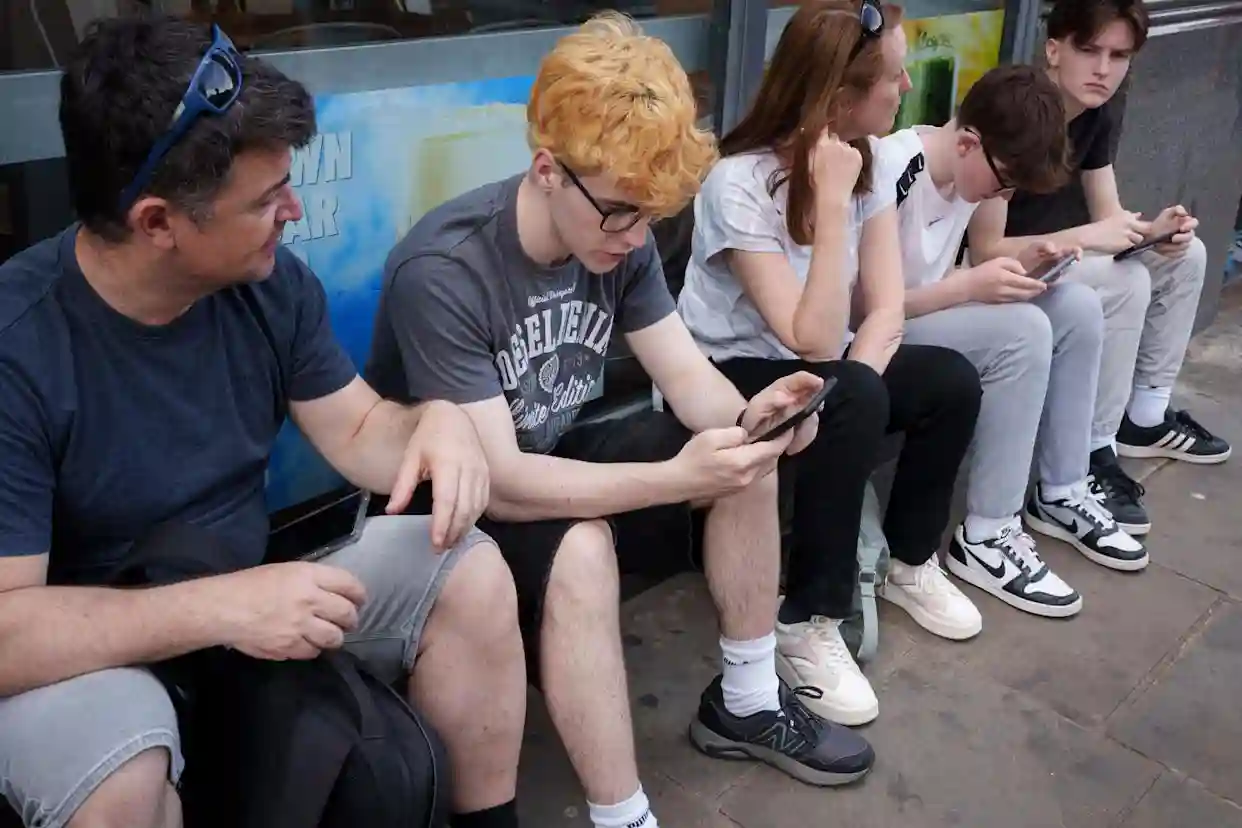
Nearly one-third of US teenagers now use AI chatbots every day or more, according to a new nationally representative survey from Pew Research Center. While these tools haven’t replaced social media, they’ve quickly become a meaningful part of teens’ online habits in just a few short years. The findings shed light on how often teens turn to AI, which platforms they prefer, and how this trend intersects with mounting safety concerns and stable social media use.
How Often Teens Use AI Chatbots
Pew’s report draws on responses from 1,458 US teens aged 13 to 17, surveyed online in late 2025 and weighted to reflect national demographics. Overall, 48 percent of teens said they use AI chatbots at least several times a week. Within that group, 12 percent reported using them several times a day and 4 percent said they use them “almost constantly.”
That level of engagement is still below the most addictive social platforms—about 21 percent of teens say they use TikTok almost constantly and 17 percent say the same for YouTube—but it is striking given how new AI chatbots are compared with long-standing apps. The numbers suggest AI has quickly shifted from novelty to routine tool for schoolwork, entertainment, and conversation.
Which Chatbots Teens Prefer
The study also breaks down which AI services teens are actually using. OpenAI’s ChatGPT leads by a wide margin: 59 percent of teens said they have used it at least once. Google’s Gemini ranks second at 23 percent, followed by Meta AI at 20 percent. Microsoft’s Copilot has been tried by 14 percent of teens, while 9 percent say they have used Character AI and just 3 percent report using Anthropic’s Claude.
This distribution reflects both brand visibility and integration: ChatGPT’s early popularity in schools and media coverage gave it a head start, while Gemini and Meta AI benefit from ties to existing Google and Meta products teens already use. Smaller or more specialized platforms trail far behind, at least for now.
Safety Concerns and Legal Scrutiny
The rise in teen chatbot use is unfolding alongside intensifying scrutiny of how AI companies handle younger users. Several wrongful death lawsuits have been filed against OpenAI and Character AI by parents who allege their teens’ interactions with chatbots contributed to their suicides. In response to these and other concerns, Character AI briefly banned teen users outright before introducing a more limited, guided format for minors.
Regulators are also paying attention. The FTC is investigating multiple companies, including those behind AI companion and assistant bots, over whether their safety policies adequately protect younger users. Lawmakers have floated age restrictions and transparency requirements specifically targeting AI chat services, echoing past regulatory waves aimed at social networks.
Teen Social Media Use Remains Stable
Despite the rapid growth of AI tools, Pew’s data suggests that teens’ social media habits have not changed dramatically in the past few years. YouTube remains dominant, with 92 percent of teens saying they use it. TikTok is next at 69 percent, followed by Instagram at 63 percent and Snapchat at 55 percent.
The one major mover is WhatsApp, which has seen its teen adoption rise from 17 percent in 2022 to 24 percent in the latest survey. That bump likely reflects both growing immigrant and multilingual communities and the app’s increasing role as a family and friend messaging hub rather than a traditional “social feed.” Overall, though, social media usage “remains relatively stable,” suggesting that AI chatbots are mostly additive rather than replacing existing platforms.
What This Means for Parents, Teens, and Platforms
- Teens are normalizing AI chatbots as everyday tools, not just curiosities or homework hacks.
- ChatGPT’s dominance shows how quickly a single brand can become synonymous with a technology category among young users.
- Legal cases and regulatory probes underscore that chatbot design is no longer viewed as harmless experimentation when minors are involved.
- Social media remains deeply entrenched; AI is supplementing, not supplanting, YouTube, TikTok, and other apps.
- Messaging platforms like WhatsApp are quietly gaining ground, especially for private, group-based communication.
Practical Steps for Families Navigating Teen AI Use
- Ask your teen which AI tools they use and what they use them for (homework, creative writing, venting, role-play).
- Set shared guidelines about topics that should never be handled by AI alone, such as mental health crises or self-harm.
- Encourage transparency: if a chatbot conversation feels upsetting or confusing, they should feel safe bringing it to an adult.
- Review privacy and safety settings together on AI apps and any platforms that integrate AI assistants.
- Balance AI time with real-world and human social interactions rather than banning tools outright.
The data makes clear that AI chatbots are no longer optional background tech for today’s teens; they’re becoming part of daily digital life, much like search engines and social feeds. The challenge now is less about if teens will use AI and more about how to ensure those interactions are safe, transparent, and genuinely helpful rather than harmful or exploitative.