The Fallout TV series from Amazon Prime has undoubtedly become one of the streaming platform’s biggest success stories, drawing in millions of viewers worldwide and reigniting interest in the beloved game franchise. Following Season 1’s explosive reception, Season 2 has already premiered to even greater acclaim while releasing episodes weekly. However, what’s capturing fans’ attention now is a potential cameo that would tie the show even more closely to the legendary games — a possible appearance by Ron Perlman, the voice actor synonymous with Fallout’s iconic “War never changes” line.
The Voice That Defines Fallout
Ron Perlman has become a cornerstone of Fallout’s identity. His gravelly, resonant narration has opened nearly every mainline entry in the series, from the original Fallout released in 1997 to Fallout 76. Beyond his voice-over work, Perlman has also lent his talent to in-game roles such as Butch Harris in the first Fallout and the newscaster at the beginning of Fallout 4. His contributions have helped define the tone and atmosphere of a world ravaged by nuclear war and human ambition.
It’s no exaggeration to say that Fallout without Ron Perlman would feel incomplete. His delivery of the phrase “War never changes” is practically the franchise’s heartbeat — calm, haunting, and steeped in bitter truth. So, when rumors surfaced that he might appear in Amazon’s Fallout series, fans were understandably thrilled.
Todd Howard’s Subtle Hint
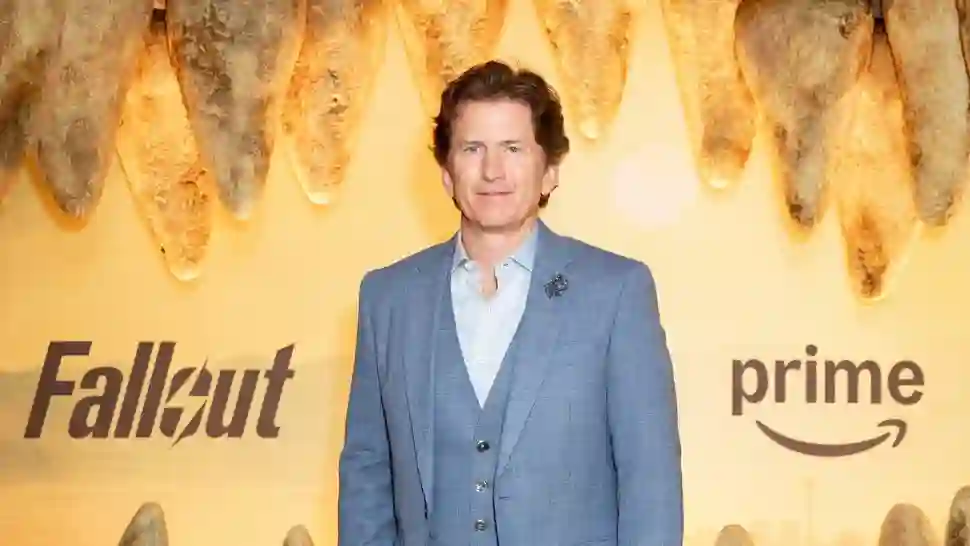
Recently, Bethesda’s game director and executive producer Todd Howard addressed the topic during an interview, offering intriguing clues without confirming anything outright. Howard praised Perlman for his longstanding relationship with the studio, saying, “We love Ron, we’ve worked with him a lot. When you think about him and you think about that voice, you think about if there’s a place and what’s the right one.”
While not a definitive statement, Howard’s words suggest that the creative team behind the show has considered ways to include Perlman in a meaningful way. His phrasing — “is there a place and what’s the right one?” — implies not only respect for Perlman’s legacy but also a deliberate approach to finding a part that fits organically within the show’s narrative.
Evidence and Speculation About His Involvement
Adding fuel to the speculation, Ron Perlman was spotted at the Los Angeles premiere of Fallout Season 2 earlier this month, posing for photos with the cast and crew. This has sparked theories that his appearance was more than a friendly visit — perhaps hinting at a secret role in the season’s later episodes.
Earlier this year, during a fan convention, Perlman also made a coy remark when asked about his connection to Season 2, stating, “I can’t talk about number two.” He then added, “But just in not talking about it, I think I just talked about it.” Fans immediately latched onto the comment as a likely confirmation that he would, in fact, appear in the new season.
There’s also speculation surrounding a mysterious character heard in the official Season 2 trailer — a deep, commanding voice that fans believe could belong to Perlman. The voice closely resembles that of certain Super Mutant characters from the games, leading to theories that Perlman might portray Marcus, the beloved mutant leader from Fallout 2 and Fallout: New Vegas. Others believe he could play an entirely original character, which would allow the show to honor his legacy while keeping the story unpredictable.
Respecting the Source Material
Howard’s comments also touched on how the TV adaptation respects the games’ narratives while branching into its own territory. He reiterated that the series aims to “honor all endings” from Fallout: New Vegas rather than choosing a single canonical path. This approach demonstrates that the showrunners want to celebrate Fallout’s vast world and multiple timelines instead of restricting fans to one interpretation. Including Ron Perlman would further cement that respect for the franchise’s deep roots and long-time fans.
The second season’s success suggests the creative team has found the right balance between nostalgia and fresh storytelling. By introducing new characters, dramatic arcs, and high production values, Amazon’s Fallout series has become a rare example of a game adaptation that satisfies both critics and fans.
Why Ron Perlman’s Involvement Matters
Bringing Perlman into the show — whether as a narrator, a newscaster, or a post-apocalyptic wanderer — would feel like connecting the TV series directly to the heart of Fallout’s legacy. His voice has transcended generations of players, becoming an auditory symbol of moral decay and resilience in a ruined world. Even if his role is brief, his presence would be a powerful tribute to the franchise’s history.
A cameo or vocal reprise could also strengthen the bridge between Bethesda’s games and Amazon’s adaptation, signaling to fans that the creative team truly understands what makes Fallout special. It would also provide a nostalgic touchstone for long-time fans who’ve grown up hearing Perlman’s words usher them into each new apocalypse.
The Fallout Universe Continues to Grow
The Fallout series has done more than just entertain — it has revitalized the games themselves. Since the show’s release, the franchise has seen a massive resurgence in player activity across Fallout 4, Fallout 76, and older entries thanks to renewed interest and sales promotions. As Bethesda continues developing future Fallout projects, the synergy between TV and game audiences has never been stronger.
Whether or not Ron Perlman officially appears in Season 2, his legacy continues to resonate across every aspect of Fallout. The producers clearly appreciate his cultural significance to the brand, and if the hints from both Perlman and Todd Howard are any indication, fans may not have to wait long to hear that unmistakable voice echo through the wasteland once more.
If Perlman does return, it won’t just be a nostalgic nod — it will feel like Fallout coming full circle, connecting its past, present, and future through the voice that has always told us, with quiet authority, that “war never changes.”