
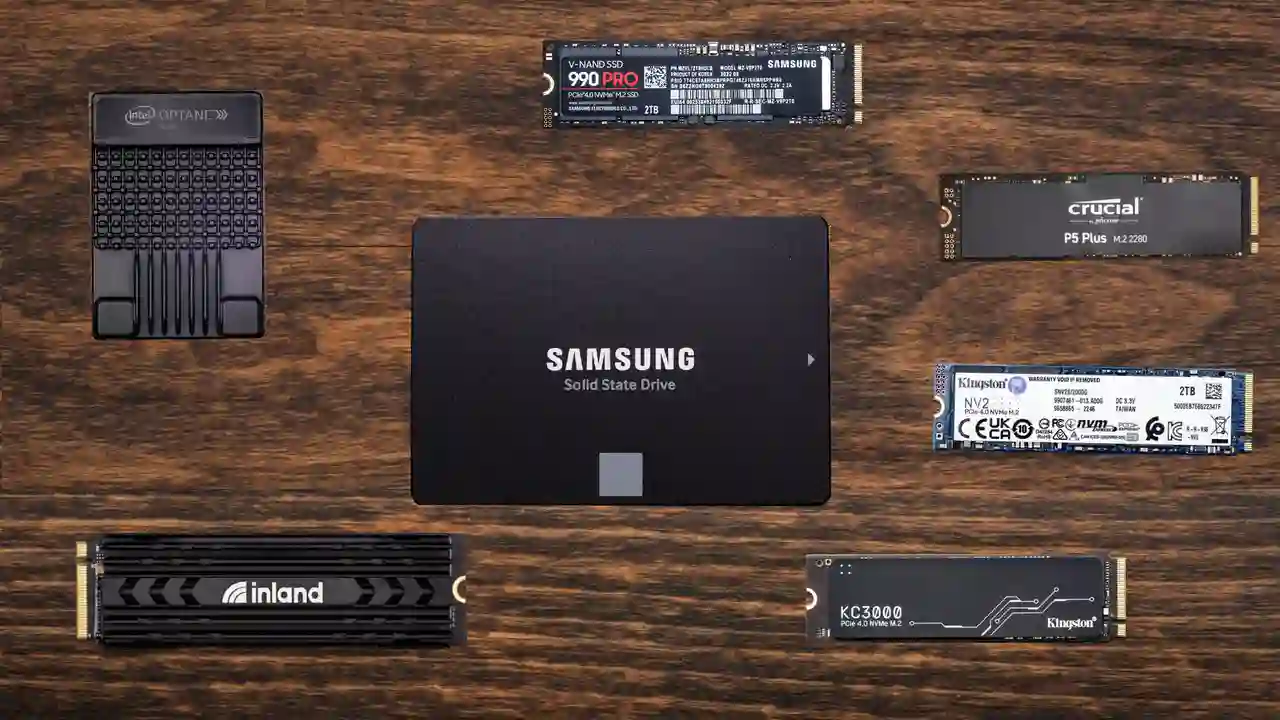
Upgrading to a high-quality solid-state drive remains one of the most transformative enhancements for any computer setup in 2026, instantly revitalizing sluggish systems with lightning-fast boot times, seamless app launches, and effortless file handling. Whether breathing new life into aging laptops, powering demanding gaming rigs, or streamlining creative workflows, the right SSD delivers noticeable responsiveness that mechanical hard drives simply cannot match. With options spanning budget-friendly SATA models to blistering PCIe Gen5 NVMe drives, selecting the best fit involves balancing capacity, interface compatibility, and real-world performance needs amid a crowded market of evolving standards.
Navigating SSD specs starts with understanding core interfaces: traditional 2.5-inch SATA drives offer broad compatibility for legacy systems, capping at around 560MB/s reads but excelling in value for everyday upgrades. Newer M.2 NVMe drives leverage PCIe lanes for exponential gains—Gen3 up to 3,500MB/s, Gen4 soaring to 7,000MB/s+, and Gen5 pushing theoretical peaks beyond 14,000MB/s—though practical benefits shine most in content creation, 4K video editing, and DirectStorage-enabled games. Capacities from 500GB to 8TB cater to varied demands, while warranties typically span five years, underscoring endurance ratings measured in terabytes written (TBW).
Top SATA Pick: Crucial MX500
For universal upgrades, the Crucial MX500 stands unmatched as the premier SATA SSD, blending rock-solid reliability with sequential reads of 560MB/s and writes at 510MB/s across 500GB to 4TB capacities. Priced accessibly—often dipping below $50 for 1TB during sales—it features dynamic write acceleration, power loss protection, and a robust five-year warranty, making it ideal for OS boots, media libraries, or extending older PCs’ lifespans without compatibility headaches. Testers praise its consistent performance over years of heavy use, from photo archives to game storage, proving SATA’s enduring relevance despite flashier alternatives.
Elite Gen5 NVMe: Crucial T700
Blazing trails for future-proof builds, the Crucial T700 dominates Gen5 with 11,700MB/s reads and 9,500MB/s writes in 1TB to 4TB sizes, harnessing Phison E26 controllers and Micron 232-layer TLC NAND for unparalleled throughput in AI workloads or massive datasets. While requiring PCIe 5.0 motherboards and heatsinks to tame thermal throttling, its DirectStorage support accelerates game loading dramatically. At around $140-180, it suits enthusiasts chasing peak specs, though Gen4 often suffices for most without the premium cost or power draw.
Balanced Gen4 Powerhouse: WD_Black SN850X
The WD_Black SN850X earns best Gen4 honors with 7,300MB/s reads and 6,300MB/s writes in up to 8TB, optional heatsinks, and five-year coverage, delivering value at sub-$100 for 1TB on sale. Optimized for gaming via Game Mode 2.0, it slashes load times in titles like Cyberpunk 2077 while excelling in 4K exports. For budget Gen4, the SN770 trades minor speed for affordability, perfect as a boot drive in single-slot systems.
Specialized and Portable Standouts
Handhelds like Steam Deck favor the compact Sabrent Rocket 2230 (5,000MB/s reads) for seamless 2230-slot expansion without overheating. PS5 users gravitate to Corsair MP600 Pro LPX, its pre-installed heatsink ensuring 7,100MB/s compliance for effortless 2TB+ storage boosts. On the go, Crucial X9 Pro portable SSDs hit 1,050MB/s via USB-C with IP55 ruggedness across 1-4TB, outpacing flash drives for backups. Keychain warriors opt for Samsung Fit Plus USB sticks, blending 400MB/s speeds with sleek, durable design in 128-512GB.
Buying Guide Essentials
Prioritize PCIe compatibility—Gen3/4 for broad gains, avoiding Gen5 unless workloads demand it—while favoring TLC over QLC NAND for endurance. Heatsinks mitigate throttling on high-end NVMe, and tools like CrystalDiskMark validate claims. Capacity trumps marginal speed: 1TB+ prevents slowdowns near full. Consoles simplify choices—Xbox proprietary cards, PS5 Gen4 with heatsinks—while portables emphasize USB 3.2/Thunderbolt, encryption, and drop-proofing. In 2026, SSDs democratize speed, turning dated hardware into powerhouses and ensuring investments endure through evolving tech landscapes.