
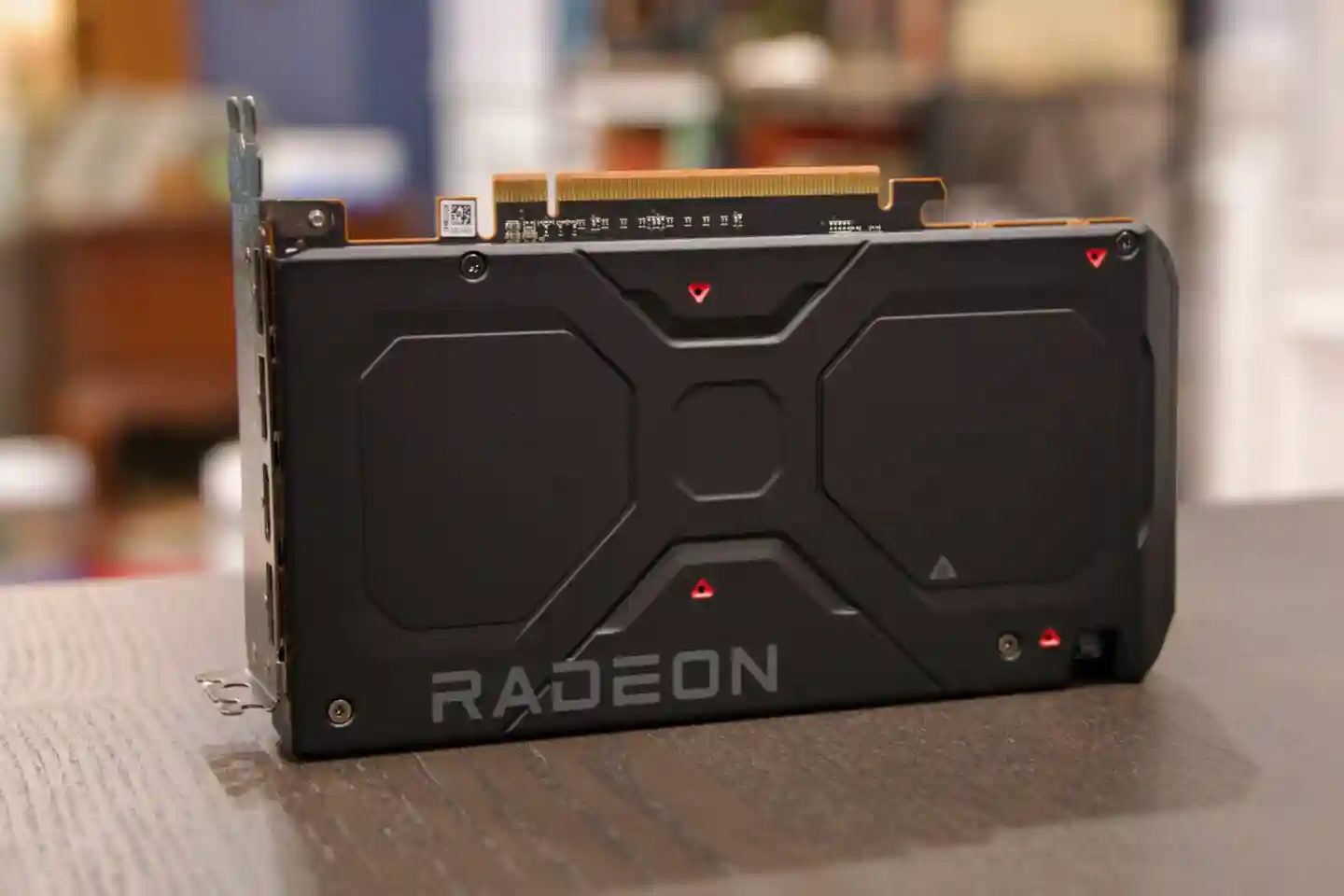
Valve’s upcoming Steam Machine is positioned as an accessible desktop PC built to deliver smooth performance at 1080p and even 1440p in many modern games. With the aid of FSR upscaling, the device can occasionally stretch to 4K, making it comparable to systems equipped with a current midrange graphics card. However, despite the promising architecture and the familiar RDNA3 foundation, one specification has drawn notable concern: the decision to ship the system with only 8GB of dedicated GDDR6 video memory.
This amount of VRAM, once standard for midrange GPUs, is rapidly becoming a limiting factor in the latest graphically demanding titles. Reviews of mainstream GPUs like AMD’s Radeon RX 7600 and Nvidia’s GeForce RTX 4060 have repeatedly shown that 8GB can restrict performance, especially at 1440p. During internal testing on SteamOS, these constraints become even more visible. In fact, current SteamOS betas demonstrate that games hitting the VRAM ceiling suffer more severe slowdowns than when running the same hardware and settings on Windows 11.
Valve acknowledges that performance is still being optimized, and while solutions are underway, the issue remains significant. As the company prepares to support a fixed hardware configuration with the Steam Machine, the need to refine memory management has become more pressing than ever.
Comparing Performance: SteamOS vs. Windows
Extensive testing on dedicated Radeon GPUs sheds light on how the VRAM bottleneck presents itself differently depending on the operating system. The Radeon RX 7600, offering 8GB of VRAM, and the RX 7600 XT, equipped with 16GB, provide a near-perfect comparison baseline. Both cards share the same RDNA3 architecture and nearly identical specifications, with the sole meaningful distinction being memory capacity.
This similarity allows differences in performance to be attributed almost entirely to VRAM constraints. In games like Borderlands 3 and Cyberpunk 2077 without ray-tracing, performance remains comparable between the two cards. The situation shifts dramatically once ray-tracing is enabled. At 1440p in Cyberpunk and even at 1080p in titles like Returnal and Forza Horizon 5, the 7600 XT begins to pull ahead by wide margins, revealing how severely 8GB of VRAM can restrict frame rates.
Even more telling is that SteamOS amplifies these disparities. Where Windows 11 manages VRAM spillover more gracefully, SteamOS experiences harsher drops in performance—sometimes reducing playability to a slideshow-like state. This is in stark contrast to handheld-focused testing, where SteamOS often performs on par with or better than Windows due to differing hardware bottlenecks. The evidence strongly suggests that the Steam Machine’s software stack needs further refinement to handle memory pressure as effectively as Windows does.
Valve’s Response and Ongoing Improvements
Valve software developer Pierre-Loup Griffais confirms that VRAM management has become a major focus within the SteamOS development pipeline. According to Griffais, when VRAM fills up, games begin allocating render tasks to system memory across the PCIe bus. This leads to large performance penalties, particularly in games that frequently load high-resolution assets or rely heavily on real-time effects like ray-tracing.
This behavior aligns precisely with what testing has revealed. Games that remain smooth under Windows struggle on SteamOS in identical conditions, revealing how the current memory management strategy needs improvement. Griffais indicates that enhancements to video memory allocation are in progress and will soon be merged into the SteamOS main testing branch. Although no definitive timeline was provided, these changes aim to stabilize performance for 8GB GPUs and reduce the gulf between the two operating systems.
Part of the reason this problem hasn’t surfaced earlier is that SteamOS has historically been deployed on devices with integrated graphics. Systems like the Steam Deck rely on shared system memory rather than a fixed pool of VRAM, meaning they can dynamically use more RAM as needed—an approach also used by devices like the Framework Desktop and its integrated Radeon solutions. With the Steam Machine, Valve will be supporting its first officially branded desktop hardware that must operate within the confines of dedicated VRAM limits.
Looking Ahead: Expectations for the Steam Machine
While 8GB of VRAM will remain a limiting factor for certain graphically intensive titles, Valve’s continued work on SteamOS and Proton is intended to mitigate the most severe performance drops. The goal is to ensure that 8GB GPUs on SteamOS perform at least as reliably as they do under Windows 11. The Steam Machine’s standardized platform may ultimately be its greatest advantage, giving Valve a predictable hardware baseline to optimize around—potentially improving performance not only on Valve’s own device but also on other PCs with similar midrange configurations.
How Valve Is Approaching the VRAM Bottleneck
- Refining SteamOS video memory management to reduce performance loss during VRAM overflow.
- Testing and merging improvements into the SteamOS main development branch.
- Evaluating real-world performance gaps using comparable GPUs such as the RX 7600 and RX 7600 XT.
- Enhancing Proton behavior to optimize asset loading and rendering under memory pressure.
- Preparing Steam Machine launch optimizations centered on fixed VRAM configurations.