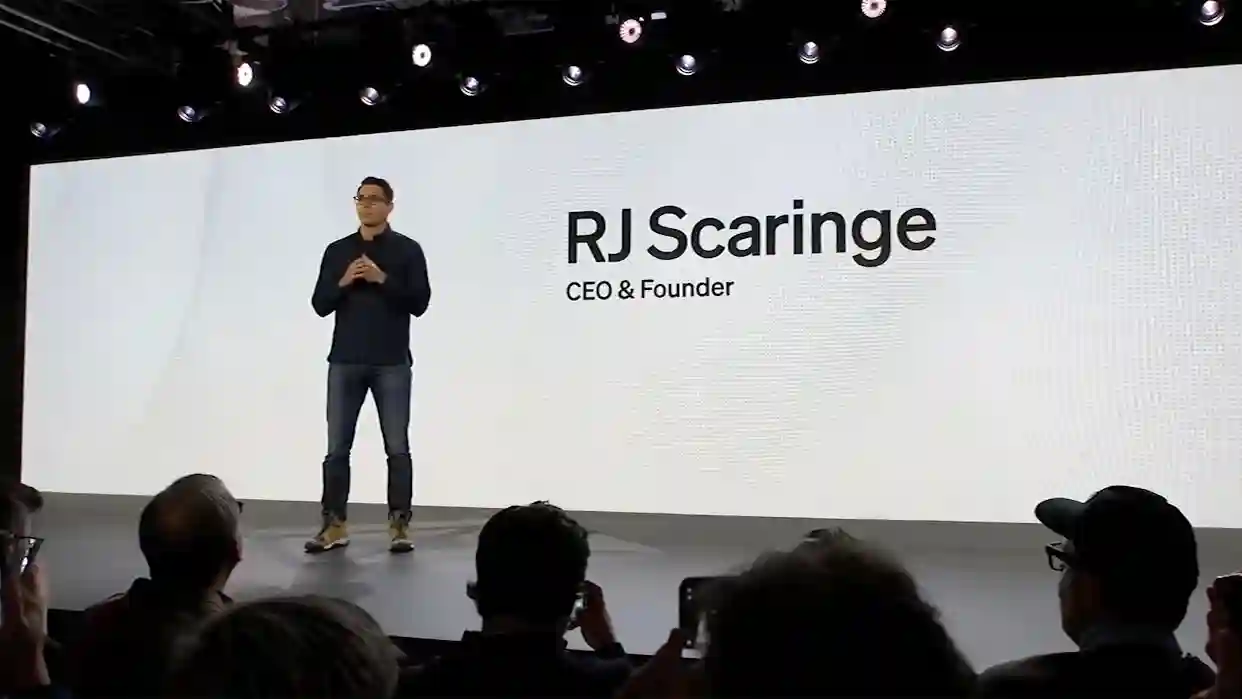
Rivian hosted its inaugural Autonomy and AI Day in the Bay Area, unveiling ambitious advancements in hands-free driving, custom AI hardware, and an intelligent in-cabin assistant. CEO RJ Scaringe’s keynote highlighted “universal hands-free” autonomy covering 3.5 million miles of North American roads, alongside the RAP1 processor, LiDAR integration, and a deeply contextual Rivian Assistant rolling out in 2026.
Universal Hands-Free Driving
Rivian’s headline reveal promises hands-free operation across “the vast majority of marked US roads.” Leveraging new LiDAR sensors and end-to-end neural networks, the system navigates complex urban environments, highways, and suburbs without driver intervention on pre-mapped routes.
Key capabilities include:
– Dynamic lane changes based on traffic and efficiency
– Intersection handling with pedestrian/vehicle prediction
– Parking lot navigation and summon functions
– R2 platform compatibility from launch
The company emphasized safety through redundant sensor fusion—cameras, radar, ultrasonics, and now LiDAR—positioning Rivian against Tesla FSD and Waymo.
RAP1: Rivian’s Custom AI Processor
Debuting the RAP1 (Rivian Autonomy Processor 1), a bespoke silicon chip optimized for real-time inference. Fabricated on advanced nodes, it delivers 10x the performance of prior generations, enabling low-latency decision-making for autonomy stacks.
RAP1 powers:
– Multi-camera 360° perception
– Predictive world modeling
– Voice/natural language processing
– In-cabin experience orchestration
In-house development reduces Nvidia/Qualcomm dependency, accelerating over-the-air updates.
Rivian Assistant: Agentic In-Cabin AI
The Rivian Assistant transforms vehicles into proactive companions, integrating Google apps (Maps, Calendar) with vehicle controls. Live demos showcased:
– “What’s on my calendar today?” with event summaries
– Rescheduling calls via voice: “Move my 2PM to 3PM”
– “Navigate to [contact name]’s meetup location”
– “Make seats toasty for everyone except me”
Deep Google collaboration enables seamless third-party service access. Multimodal inputs—voice, touch, gaze—create context-aware responses, replacing fragmented voice commands.
R2 Platform Autonomy Leap
Mass-market R2 gains full-stack autonomy from day one: LiDAR, RAP1, universal hands-free. Priced accessibly, it democratizes advanced driver assistance, challenging affordable EVs lacking sophisticated stacks.
Software roadmap accelerates via fleet learning—millions of R1 miles training neural nets for R2 deployment.
Autonomy Tech Comparison
| Feature | Rivian | Tesla FSD | Waymo |
|---|---|---|---|
| Hands-Free Coverage | 3.5M miles NA | Supervised everywhere | Geofenced cities | Hardware | RAP1 + LiDAR | HW4 cameras only | LiDAR + HD maps | Assistant Integration | Native agentic | Voice commands | App-based | R2/R3 Support | Day one | Subscription | N/A |
Strategic Implications
Rivian’s pivot from hardware innovator to AI leader addresses EV market saturation. Autonomy differentiates premium pricing; RAP1 vertical integration cuts costs; agentic interfaces boost satisfaction.
Event brevity—under an hour—signals execution focus over hype. Attendees sampled demos, validating live claims. 2026 R2 launch tests delivery promises amid production ramps.
Challenges Ahead
Regulatory hurdles loom for Level 3+ autonomy. Scaling neural nets requires vast data; RAP1 yields unproven at fleet scale. Competition intensifies—Lucid, Fisker pivot to software; legacy automakers partner Nvidia.
Investor confidence hinges on timeline adherence. Universal hands-free by mid-2026? R2 autonomy parity? Success redefines Rivian beyond Amazon delivery vans.
Rivian Autonomy Day positions the startup as Tesla’s most credible challenger—vertically integrated, safety-first, passenger-focused. From garlic bread origins to AI leadership, Scaringe’s vision matures, betting silicon and software conquer silicon valley skepticism.