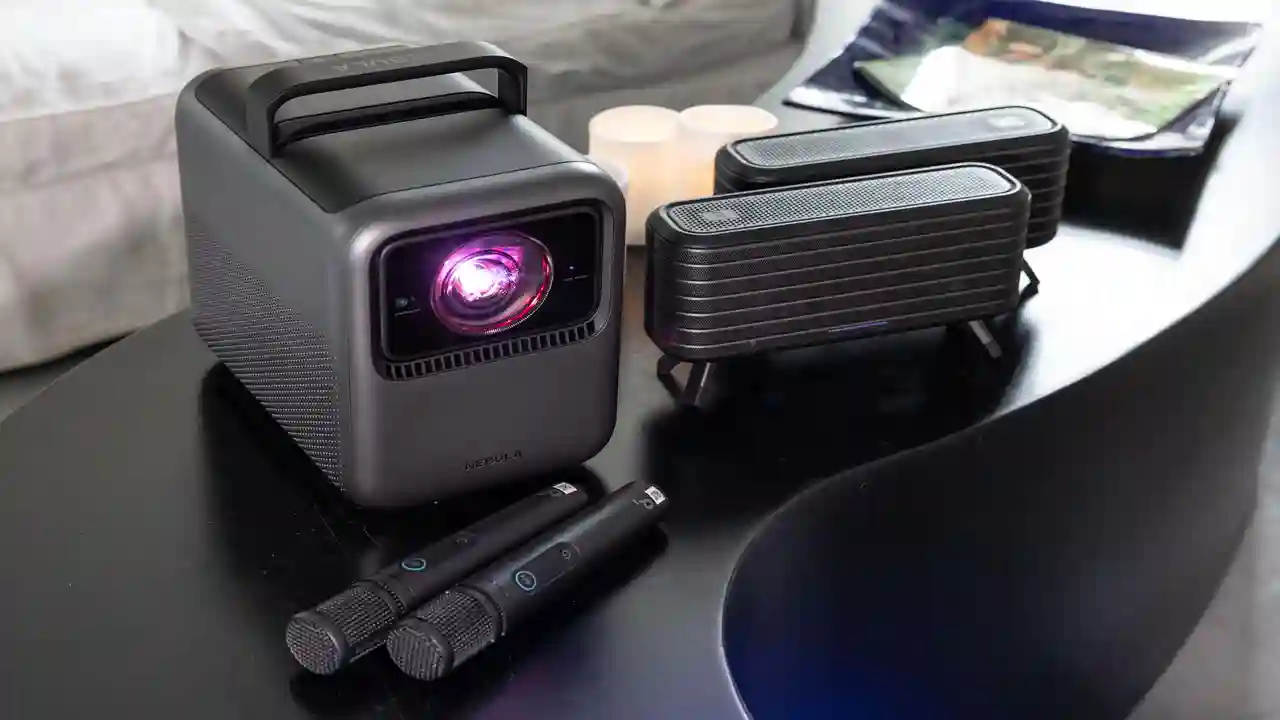
Projectors transformed from niche curiosities to mainstream must-haves in 2025, driven by Anker Nebula X1 and Valerion VisionMaster Max breakthroughs. Triple-laser engines deliver 3,500+ lumens for daytime viewing, motorized auto-keystone eliminates setup hassles, and anti-rainbow DLP tech resolves longstanding complaints. Market projections show home projectors nearly doubling by 2030 as consumers embrace cinema-scale experiences rivaling $3,000 TVs at similar prices.
Key Technological Leaps
LG’s 2018 CineBeam pioneered portable laser projection; 2019 UST models shrunk throw distances to inches. 2025’s stars combine liquid cooling for silent operation, Dolby Vision HDR accuracy, and dynamic irises rivaling $10,000 JVC flagships. Anker Nebula X1’s retractable handle enables backyard movie nights; Valerion’s Enhanced Black Levels achieve inky depths previously impossible under $5,000.
Motorized lens calibration auto-fits images to walls/screens in seconds—perfect for renters avoiding permanent mounts. Battery-powered portables support camping tailgates; ceiling-recessed USTs vanish when unused.
Top 2025 Projector Showdowns
| Model | Brightness | Key Innovation | Price Range |
|---|---|---|---|
| Anker Nebula X1 | 3,500 lumens | Portable triple-laser | $1,500-$2,500 |
| Valerion VisionMaster Max | 3,000+ lumens | Anti-rainbow + black levels | $1,800-$3,000 |
| Formovie UST | 3,000 lumens | Ultra-short throw | $2,000-$4,000 |
Projectors vs TVs: The Real Comparison
120-inch projectors match 65-inch TVs spatially but dwarf them cinematically. TVs win brightness (500+ nits vs 300 max), instant-on convenience, no screen needed. Projectors demand darkness for peak contrast but excel in immersion—sports stadiums, racing sims, family movie nights scale perfectly. Ceiling mounts reclaim floorspace; rollable screens enable dual TV/projector rooms.
2025 Market Momentum
- Soundcore Nebula X1: Engadget’s top home theater product
- Valerion Max: Deepest blacks in price class
- Kickstarter dominance: Top two projectors ever
- Google Trends explosion: Anker/Valerion searches spike
- COVID catalyst: Theater closures birthed home cinema boom
Perfect Projector Setup Guide
- Measure throw distance: UST (inches from wall) vs long-throw (8-12 ft)
- Calculate screen size: 100-150″ for immersion; match room width
- Choose surface: Ambient light rejecting (ALR) screens kill glare
- Mount securely: Ceiling recessed for UST; tripod portable
- Calibrate: Auto-keystone + focus; manual lens shift for perfection
- Audio upgrade: Pair with soundbar/subwoofer (projectors lack bass)
- Darken room: Blackout curtains double contrast 2-3x
Gaming and Sports Revolution
Low-latency projectors (<20ms) handle Switch 2, PS5 racing wheels. 120Hz support smooths football replays; 4K@120fps future-proofs. Multiplayer scales perfectly—8 friends around 120" screen beats TV huddles. Outdoor projectors transform backyards into drive-ins.
Future Innovations Incoming
Roll-up screens eliminate permanent installs; bidirectional audio syncs soundbars wirelessly. MicroLED light engines promise 5,000+ lumens daytime viewing. AI auto-calibration reads room geometry; 8K native resolution emerges 2027+. Battery life hits 4+ hours for tailgating.
Engadget Convert Testimonial
Editor Devindra Hardawar swapped TV for Formovie UST: “Big TVs can’t match 120-inch cinematic scale. Everything feels epic, not screen-like.” Perfect for podcasters hosting watch parties—projectors flex where TVs constrain.
Projectors won 2025 by solving pain points: brightness, noise, setup complexity. $1,500 buys theater-grade immersion TVs can’t match spatially. Cinephiles reclaim living rooms; families bond over backyard epics. As rollable screens commoditize, projectors escape niche status—2026 projects market doubling as consumers discover cinema lives beyond OLED panels.