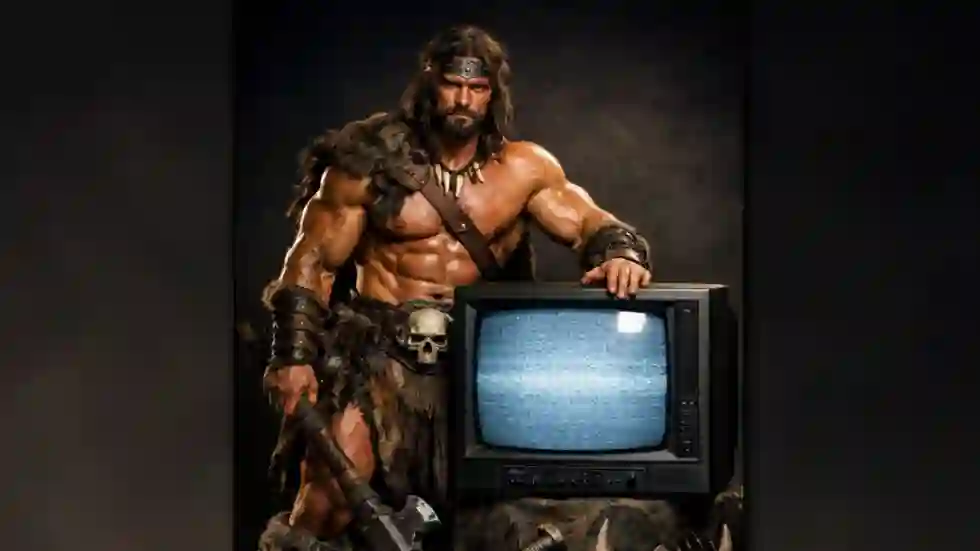
For nearly two centuries, photographers and artists relied on skill, technique, and tools like the darkroom or Photoshop to alter images convincingly. Today, OpenAI’s newest release, GPT Image 1.5, reduces that process to something as easy as typing a sentence. The update transforms image editing into an instant, conversational experience and marks a major step toward a future where creating or manipulating photorealistic images demands no technical training at all.
The Arrival of GPT Image 1.5
GPT Image 1.5 represents the latest evolution in OpenAI’s image generation technology. It builds on previous models, notably DALL-E 3, while introducing true “multimodal” integration—processing text and images together within the same neural framework. This means the AI doesn’t distinguish between words and pixels; instead, it treats both as data tokens that form predictable patterns. The result is an image-generation process that feels as natural as writing a paragraph.
According to OpenAI, GPT Image 1.5 generates images four times faster than earlier models while being 20 percent less expensive to use through the API. It is deeply embedded in ChatGPT, giving users instant access for both creative and professional image manipulation. From adding surreal characters to photos to altering lighting, background, or clothing, the model allows users to describe what they want, see immediate results, and refine outputs through simple conversation.
How It Changes Image Creation
Unlike diffusion models that progressively “paint” images into existence, this new token-based framework allows the AI to interpret image editing as a language prediction task. If a user uploads a picture and asks the model to adjust a person’s outfit or change an environment, the system predicts appropriate visual tokens just as it would predict the next word in a sentence. This methodology enables seamless scene adjustments—changes in perspective, refined poses, and consistent facial likeness throughout multiple edits.
To support these capabilities, OpenAI has updated the ChatGPT interface with a new visual workspace designed for image generation. This dedicated space features thematic filters, suggested prompts, and trending visual templates, making it easier for beginners to experiment. The result feels like blending the power of Photoshop with the conversational ease of a chat window.
Competition With Google’s Image Models
GPT Image 1.5’s release isn’t happening in a vacuum. Earlier in the year, Google’s “Nano Banana” and “Nano Banana Pro” models won widespread acclaim for realistic image generation and accurate text rendering. Those tools set a new bar for integrating visual editing into AI chat environments. OpenAI’s newest model appears both a response and a challenge to Google’s success, aiming to close the gap in editing precision and creative flexibility.
For context, the table below outlines a quick comparison between OpenAI’s and Google’s image generation models:
| Feature | GPT Image 1.5 (OpenAI) | Nano Banana Pro (Google) |
|---|---|---|
| Processing Speed | 4x faster than DALL-E 3 | High-speed token rendering |
| Cost Efficiency | ~20% cheaper than prior versions | Integrated into Gemini subscription |
| Face Consistency | Improved facial stability across edits | Reliable likeness retention |
| Text Rendering | Handles dense and small text | Strong clarity in signage and articles |
While each platform takes a distinct approach, both push the boundaries of what non-experts can do with photographs, blurring lines between real imagery and digital imagination.
Testing the Boundaries of Realism
Early testing shows that GPT Image 1.5 produces strikingly convincing visuals even with minimal prompting, though results can vary. It occasionally mishandles details or composition but achieves levels of realism far beyond its predecessors. When it performs well, it convincingly alters settings, expressions, or camera angles while keeping identities intact.
Yet, this growing capability raises complex ethical questions. The easier image synthesis becomes, the more society faces challenges surrounding truth and authenticity. OpenAI maintains a filtering system designed to block explicit or violent imagery, alongside technical markers like C2PA metadata identifying outputs as AI-generated. However, such protections can be bypassed when images are resaved without metadata or circulated through platforms lacking verification systems.
The Cultural Impact of Effortless Editing
For much of modern history, authentic photography carried a presumption of truth. Even with Photoshop, skill and time limited large-scale manipulation. GPT Image 1.5—and similar technologies—have effectively erased those barriers. Anyone can now place real people into false settings, altering evidence or creating narratives that appear genuine. The implications for misinformation, defamation, and non-consensual imagery are profound.
OpenAI acknowledges these risks while emphasizing creative potential. In legitimate use, such technology opens new avenues for design, marketing, journalism, education, and creative storytelling. Users can build complex scenes, draft visual prototypes, or experiment with lighting and perspective through natural language interaction. But the simplicity that enables creativity also removes technical friction that once served as a barrier against abuse.
Rendering Text and Complex Visuals
One of the standout features of GPT Image 1.5 is its improved ability to produce legible written content within generated images—a long-standing limitation across AI platforms. The model can render signs, posters, and even full newspaper layouts with readable paragraphs, proper formatting, and visual coherence. Demonstrations show it accurately depicting detailed documents, a feat older diffusion-based systems struggled to achieve. This advancement, while impressive, also underscores how AI-generated media is blurring distinctions between fabricated and factual visual records.
Between Innovation and Risk
OpenAI admits that GPT Image 1.5 still faces technical limitations. The model occasionally struggles with scientific diagrams, specific artistic styles, and anatomical accuracy. Developers expect these weaknesses to diminish over time as data training scales and multimodal processing becomes more refined. Despite these issues, the leap in usability and quality positions GPT Image 1.5 as one of the most accessible photorealistic image tools available today.
A New Pivotal Moment for Visual Media
The release of GPT Image 1.5 highlights a broader trend: the democratization of creativity through AI. No longer reserved for professionals or experts, advanced image editing has become a capability embedded in daily online activity. Whether used to visualize ideas, design campaigns, or craft viral memes, the potential is enormous—and so are the societal repercussions.
As AI image systems evolve, authenticity itself is being redefined. What used to require hours of creative labor now takes seconds of dialogue. The technology invites innovation while challenging humanity to rethink the role of truth in visual storytelling. GPT Image 1.5 might be the most powerful image tool ever released in a chat interface, but its ease of use ensures one thing—our ability to distinguish fact from fabrication will never be the same again.