The year 2025 has marked a significant turning point in the technology landscape, and it’s clear that the world’s biggest tech companies have collectively decided that smart glasses are the next frontier of personal computing. After years of somewhat stagnant gadget innovation, companies are now shifting their focus toward wearable augmented-reality devices designed to integrate seamlessly into everyday life. For a while, new technology felt iterative rather than transformative — faster phones, thinner laptops, better batteries — but now, the industry is buzzing again. While past attempts at futuristic devices like 3D TVs and VR headsets have struggled to reach the mainstream, smart glasses could succeed where others have failed by offering both functionality and subtlety in one sleek package.
Why the Shift Toward Smart Glasses?
Since the debut of the original iPhone, the world has witnessed numerous attempts to define “the next big thing.” Tablets were once expected to replace laptops, yet most people still use them as oversized phones. Smartwatches gained traction but became more health-focused than revolutionary. Virtual reality made a splash but remained too bulky and isolating for everyday use. Even AI-focused gadgets — despite immense hype — largely underperformed in their early stages. But smart glasses are different because they blend digital information into real-world contexts instead of pulling users away from them.
The appeal lies in their potential to merge functionality with natural human interaction. Imagine walking down the street and seeing your messages, maps, or schedules seamlessly projected before your eyes without pulling out a phone. The promise isn’t immersion like VR — it’s unobtrusive assistance that feels organic. This approach may finally balance convenience and innovation in a way previous wearable technologies have not.
Smart Glasses vs. VR Headsets
To understand the hype, it’s crucial to distinguish smart glasses from traditional VR headsets. Virtual reality devices create immersive digital environments by cutting users off from the physical world. They excel at gaming, 3D visualization, and remote collaboration but sacrifice awareness of surroundings. Smart glasses, by contrast, operate in a mixed-reality space. They overlay digital information — navigation prompts, notifications, translations — on top of real-world views. This difference transforms them from entertainment devices into daily-use tools.
While VR headsets remain essential for immersive experiences, the rise of smart glasses shows that people may prefer augmentation over isolation. The simplicity of slipping on a pair of glasses for contextual assistance — rather than fully entering another world — represents a more accessible evolution of wearable tech.
The Push From Big Tech
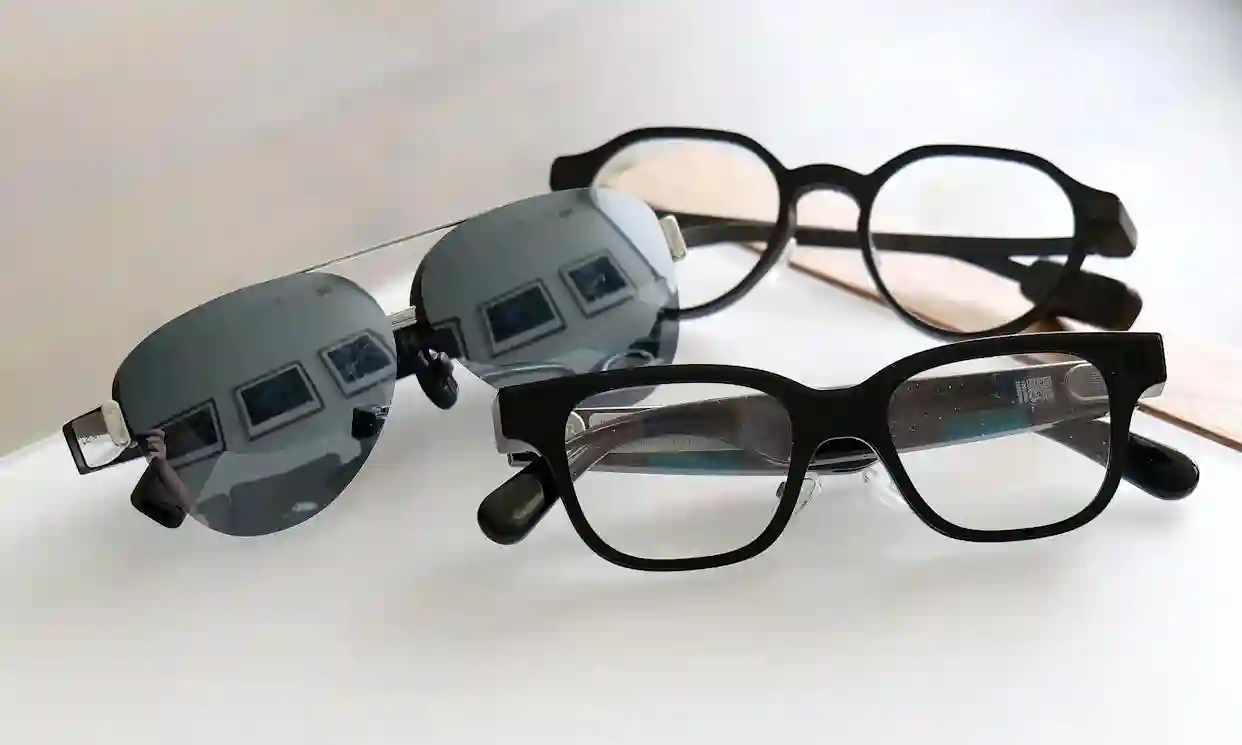
The growing investment in smart glasses is no coincidence. Meta, Apple, Google, TCL, and others are all pushing aggressively into this market. Meta, for example, paved the road with its Ray-Ban Stories line, which normalized camera-equipped eyewear that looked like ordinary sunglasses. Their latest evolution, the Meta Ray-Ban Display, adds a compact heads-up display that brings notifications, navigation cues, and even conversational AI directly into the wearer’s field of view. Apple, meanwhile, appears to be shifting its focus away from expensive mixed-reality headsets like the Vision Pro and toward more streamlined glasses aimed at broader audiences.
Google’s move is equally calculated. Beyond revamping its Android XR platform to work smoothly across mixed-reality devices, it is also collaborating with traditional eyewear companies like Gentle Monster and Warby Parker to ensure future products don’t resemble awkward tech gear. The real prize isn’t just selling devices—it’s owning the next platform of personal computing. Whoever dominates smart glasses could control how billions of people access information in the physical world.
How Smart Glasses Enhance Everyday Life
For users, smart glasses promise small yet meaningful changes in daily convenience. Imagine no longer fumbling for your phone to check who texted or searching for directions while juggling groceries. Glancing upward slightly could reveal real-time translation when you travel or a subtle reminder about your next meeting. Some models, like Meta’s newer displays or Even Realities’ G2 glasses, already support such real-time overlays.
The potential doesn’t stop there. Smart glasses can discreetly serve as teleprompters for speakers, AI assistants for multitasking, or private displays for text and media. Because they keep your head lifted rather than tilted down at a phone, they even encourage better posture and interpersonal engagement. In a world overloaded with screens, smart glasses represent an opportunity to refocus technology toward enhancement rather than distraction.
Challenges and the Road Ahead
Despite their potential, smart glasses face several challenges before hitting mainstream success. Cost remains a major barrier; top models like the Meta Ray-Ban Displays retail around $800, while others, such as the Even Realities G2 with companion accessories, push closer to $900. More affordable models from Viture and Xreal still range from $400 to $600. Additionally, prescription lens integration and comfort remain unresolved issues for users needing custom vision correction.
Then there’s the usability question. Without keyboards or touchscreens, interacting with virtual displays requires new methods. Companies are experimenting with neural input devices, gesture-based systems, and wearable rings for navigation. Meta’s “neural band,” for instance, detects tiny hand movements to control menus and type text. These solutions are promising but still in early stages. Moreover, battery life, privacy concerns, and data processing on such small hardware continue to challenge developers.
Are Smart Glasses the Next Must-Have Device?
The trajectory of smart glasses mirrors that of the early smartphone era. The technology is still finding its footing, but its potential is immense. The combination of AI, lightweight optics, and hands-free interaction could redefine how we interact with digital information. Instead of constantly pulling devices from pockets, we might simply glance, think, or gesture to access what we need.
In the near term, smart glasses may complement rather than replace phones and laptops. However, if adoption continues and comfort improves, they could eventually become the central device in our daily tech ecosystem — blending communication, navigation, work, and entertainment into a single unobtrusive accessory.
In short, the rising momentum from major players like Meta, Google, and Apple suggests that smart glasses aren’t a passing trend but the foundation for the next era of personal tech. They won’t instantly replace our phones, but they may redefine how seamlessly technology fits into our lives. After years of incremental improvements to familiar devices, 2025 finally feels like the dawn of something genuinely new — not just another screen to look at, but a smarter way to see the world.