
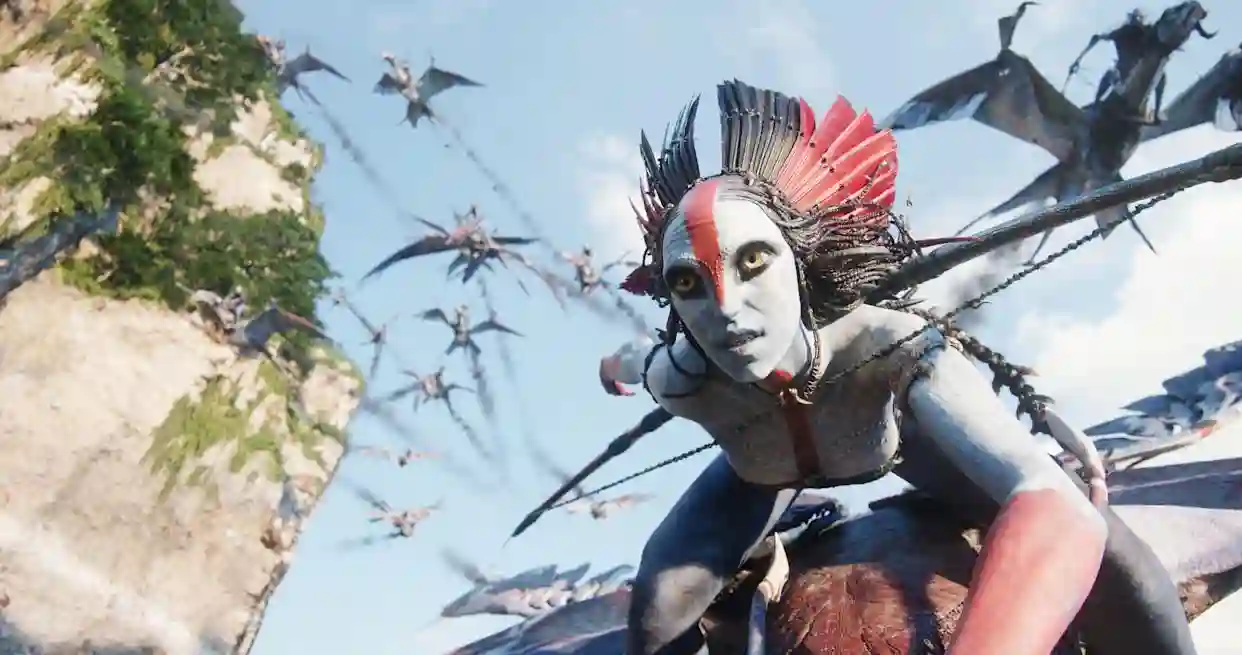
James Cameron has always been a filmmaker synonymous with innovation — a director who pushed the limits of cinematic technology with every new project. From creating the groundbreaking Fusion Camera System for the first *Avatar* to crafting the hyper-fluid motion and vivid artificial ecosystems of *The Way of Water*, Cameron turned spectacle into art. Yet, with his latest entry, *Avatar: Fire and Ash*, that creative spark feels dimmed. The third chapter in the saga delivers familiar sights and ideas but little evolution. It’s still a massive, visually immersive world, but this time, there’s a noticeable absence of wonder. For a franchise built on constant reinvention, *Fire and Ash* feels surprisingly stagnant.
Cameron’s Legacy of Innovation — and Its Absence Here
When Cameron released the original *Avatar* in 2009, it redefined what audiences could expect from visual effects and 3D cinema. *The Way of Water*, although arriving after a 13-year gap, again elevated technical artistry with its fluid simulation systems and selective use of high frame rate footage. Naturally, expectations for *Fire and Ash* were astronomical. Fans anticipated another cinematic revelation — perhaps an evolved approach to blending live-action and performance capture, or innovative rendering techniques that might rival his earlier leaps in visual fidelity.
Instead, *Fire and Ash* repeats the same tricks. The visual execution remains stunning by any normal standard, but it no longer delivers awe. The film oscillates awkwardly between 24fps and 48fps sequences, repeating a technical inconsistency that many critics of *The Way of Water* had hoped Cameron would refine. Likewise, there are no new breakthroughs in hybrid cinematography or immersive design. Without the distraction of technological wizardry, the film must rely solely on its story and characters — and that’s exactly where it falters.
A Recycled Narrative Disguised as Expansion
From a narrative standpoint, *Avatar: Fire and Ash* doesn’t so much expand Pandora as rehearse its past. We’re once again following Jake Sully (Sam Worthington) — still the same former Marine turned Na’vi warrior — leading his family’s defense against the ever-persistent humans of the Resource Development Association (RDA). The villainous Colonel Quaritch (Stephen Lang) returns in reincarnated form yet again, wielding the same motivations: revenge against Jake and the Na’vi. Meanwhile, Jake’s adopted son, Spider (Jack Champion), rehashes his conflicted loyalty arc, dancing between ideological divides we’ve already seen explored in *The Way of Water.*
The script, co-written by Cameron alongside Rick Jaffa and Amanda Silver, feels mechanical and episodic — more reminiscent of a network drama than an epic cinematic journey. The beats are predictable to the point of parody: a new threat emerges, the Na’vi stand divided, humans exploit chaos, and a massive battle ensues. While the movie leans into grand themes of environmental destruction and indigenous struggle, it fails to evolve those ideas beyond their initial presentation in the 2009 film.
The Ash People: A Flicker of Promise That Fades Too Fast
One of the potentially interesting additions comes with the introduction of the Ash People — a rogue Na’vi tribe that has rejected Eywa, the planet’s spiritual consciousness. These warriors view nature not as a sacred ally but as something that abandoned them. This inversion could have provided the dramatic spark *Fire and Ash* desperately needed. Oona Chaplin (granddaughter of Charlie Chaplin) offers a scene-stealing performance as Varang, the Ash People’s enigmatic leader. Her portrayal is fierce, layered, and filled with restrained fury. Yet the script sidelines both her and her people, reducing them to the role of “corrupted outsiders.” When they eventually ally with the humans in predictable fashion, the potential for nuance vanishes.
Instead of complicating Pandora’s moral landscape, the movie reaffirms its rigid binary: good Na’vi versus evil collaborators. The result feels disappointingly safe. Considering how *The Way of Water* hinted at fracturing Na’vi cultures and ethical contradictions, *Fire and Ash* squanders a real chance at social depth.
Spectacle Without Soul
Cameron’s flair for large-scale action remains intact — the climactic battle scenes are technically flawless, choreographed with surgical precision, and brimming with energy. Yet for all their grandeur, they lack the emotional weight that once defined Cameron’s best work. Part of the problem lies in setting: the watery biomes and oceanic skirmishes, visually beautiful though they are, evoke déjà vu. It’s a scenario recycled from *The Way of Water*, complete with another whale-protection subplot that mirrors the emotional beats of its predecessor. The endless visual excess becomes exhausting; even the most breathtaking moments blur together, numbing instead of thrilling.
Watching *Fire and Ash* feels like consuming something decadent and hollow — cinematic fast food served on fine china. The artistry of the visual effects can’t conceal the absence of narrative ambition. Pandora, once a frontier of endless imagination, now feels overly familiar and, paradoxically, smaller.
Comparing the Trilogy’s Creative Arcs
| Film | Innovation Focus | Narrative Theme | Overall Impact |
|---|---|---|---|
| Avatar (2009) | 3D cinematography and virtual production | Colonialism and environmentalism | Groundbreaking and culturally influential |
| Avatar: The Way of Water (2022) | High frame rate and fluid simulation technologies | Family unity amid displacement | Visually stunning with emotional resonance |
| Avatar: Fire and Ash (2025) | Minor technical refinement | Tribal conflict and repetition of past themes | Visually rich but thematically stagnant |
The progression (or lack thereof) speaks volumes. The third film is technically immaculate but narratively conservative — a series content to retread its old blueprint rather than forge a new frontier.
When Innovation Becomes Limitation
Cameron has always been a director fascinated by dualities: humanity versus technology, nature versus industrialization, idealism versus pragmatism. Yet at 71, he seems trapped in the very ecosystem he built. *Avatar* remains a passion project that has delivered undeniable technical milestones, but *Fire and Ash* reveals the limits of that obsession. Without innovation to anchor the spectacle, the franchise’s creative formula begins to feel claustrophobic — an endless loop of beauty and bombast that says little new about the human spirit.
The irony is cruel: Cameron’s universe about evolution and adaptation now struggles to evolve itself. Yet, there are glimmers of hope. Reports suggest that *Avatar 4* — already partially filmed — will shift settings dramatically and introduce fresh narrative perspectives. Whether that proves true or not, audiences will have to wait until 2029 to find out.
Time to Leave Pandora Behind?
*Avatar: Fire and Ash* isn’t a disaster, but it is the clearest indication that Cameron’s masterpiece might finally be running on fumes. The technical brilliance endures, and the world remains dazzling to behold, yet even the most beautiful landscapes lose meaning when we’ve wandered them too long. There’s undeniable artistry in the film’s execution, but the sense of discovery that once defined Pandora is fading.
Perhaps it’s time for Cameron — one of cinema’s most visionary architects — to let go of the world he built and venture into a new one. He’s already hinted at future collaborations and side projects, including co-directing the *Billie Eilish: Hit Me Hard and Soft* concert film. That’s promising. But one can only hope that *Fire and Ash* serves as a wake-up call for both Cameron and his audience: innovation isn’t just about technology — it’s about the courage to imagine beyond what you’ve already perfected.