
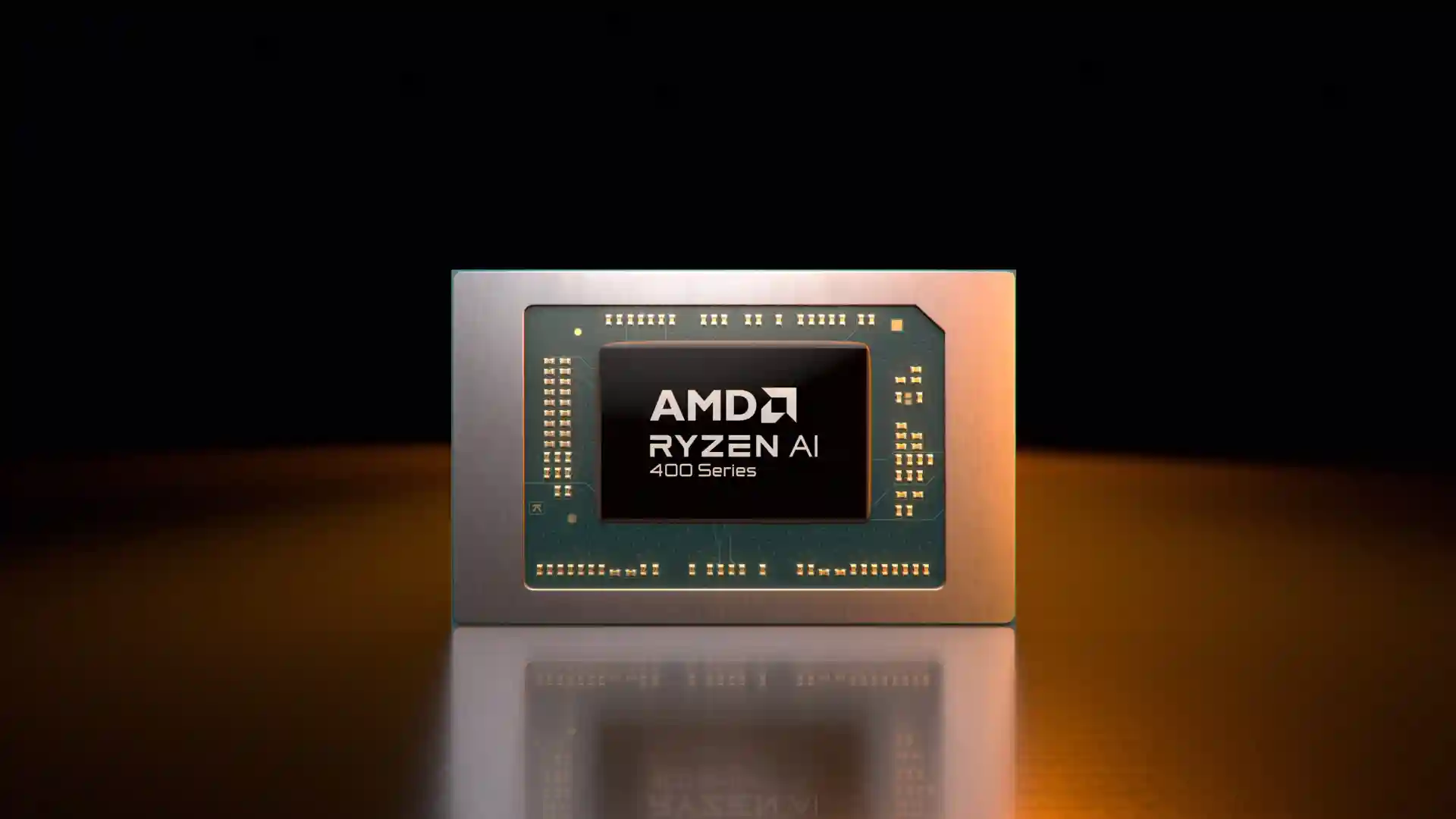
AMD’s CES 2026 announcements deliver incremental refreshes rather than architectural revolutions, extending 2024/2025 silicon through modest clock uplifts and SKU expansions across laptop AI processors and desktop gaming champions. Ryzen AI 400 series promises Copilot+ desktop certification alongside mobile variants, while Ryzen AI Max+ gains GPU-maximized configurations and AM5 receives single X3D addition. These measured updates prioritize platform longevity amid volatile memory pricing and RDNA 4 exclusivity, offering value-conscious buyers viable alternatives to premature upgrades.
Rather than Zen 6 debuts or RDNA 4 integration, AMD extends Strix Point/Hawk Point viability through 2026 OEM pipelines. Incremental TOPS gains and cache configurations target enterprise AI workloads and gaming enthusiasts respectively, maintaining competitive positioning against Intel Lunar Lake and Qualcomm Snapdragon X Elite without manufacturing requalification costs.
Ryzen AI 400 Series Refresh
Ryzen AI 400 series represents clocked-up Ryzen AI 300 variants featuring Zen 5/Zen 5c hybrid cores, RDNA 3.5 integrated graphics, and XDNA2 NPUs delivering 60 TOPS — 20% uplift over 50 TOPS predecessors. Ryzen AI 9 HX 470 boosts to 5.2GHz (from 5.1GHz HX 370) with LPDDR5X-8533 memory support; PRO variants target business Copilot+ certification with enhanced vPro manageability. Gorgon Point codename signals minor Strix Point silicon revision rather than architectural overhaul.
Laptop OEMs (Acer, Asus, Dell, HP) launch Q1 2026 systems; desktop variants arrive Q2. Incremental gains suit refresh cycles without ecosystem disruption — Thunderbolt 5, Wi-Fi 7, and USB4 remain unchanged from 2025 implementations.
Ryzen AI Max+ Gaming Configurations
Strix Halo’s Ryzen AI Max+ lineup expands with GPU-prioritized SKUs trading CPU cores for full 40 RDNA 3.5 Compute Unit activation. Max+ 392 (12 Zen 5 cores) and 388 (8 cores) unlock Radeon 8060S/8050S iGPUs rivaling discrete GTX 1650 performance in Framework Desktop and gaming ultrabooks. Gaming laptops benefit from 2560 shaders at 2.9GHz without thermal compromise of full 16-core configurations.
Reduced core counts minimally impact gaming — GPU utilization governs 1080p/1440p frame rates — while lowering pricing for discrete-free mini-PCs. RDNA 3.5 limitations exclude FSR Redstone neural features (radiance caching, ML frame gen) requiring RDNA 4 hardware; existing FSR 3.1 implementations suffice for 60-144FPS targets.
Ryzen 7 9850X3D Desktop Addition
AM5 socket gains Ryzen 7 9850X3D — 8 Zen 5 cores boosting to 5.6GHz (from 9800X3D’s 5.2GHz) with 96MB 3D V-Cache stacked beneath one CCD. 120W TDP maintains thermal envelopes while 400MHz uplift delivers 5-7% IPC uplift in cache-sensitive workloads. Geekbench/Passmark leaks confirm single-digit generational gains prioritizing gaming uplift over productivity.
$500-511 pricing positions competitively against 9800X3D; Q1 availability coincides with DDR5 price stabilization. No 9950X3D2 dual-CCD variant materializes yet — 192MB cache rumors remain CES absentia amid RDNA 4 GPU focus.
Strategic Business Context
AMD navigates volatile component economics through silicon recycling — RAM shortages and NAND scarcity elevate refresh value over innovation risk. Ryzen 8040 precedent validates approach; 7040-to-8040 clock bumps sustained relevance 18 months post-launch. AI 400 certification unlocks Copilot+ revenue streams despite NPU continuity.
FSR Redstone exclusion underscores RDNA 4 segmentation — Radeon 9060/9070 exclusivity preserves discrete upgrade cycles. Enterprise Pro variants emphasize vPro parity and 28nm TDP efficiency for thin-client deployments. Q1/Q2 ramps align OEM production avoiding Intel Arrow Lake supply constraints.
Consumer Recommendations
Prospective buyers prioritize discounts on Ryzen AI 300/9000X3D inventory over marginal 400-series uplifts. Laptop refreshers target HX 470 for 10% battery uplift; mini-PC gamers select Max+ 392 for GTX 1650 equivalence without dGPU thermals. Desktop upgraders await 9850X3D pricing stability post-launch.
RDNA 4 exclusivity maintains discrete relevance; FSR 3.1 suffices 1440p high refresh absent neural upscaling. AM5 longevity extends through 2027+ sans socket swap costs. AMD’s measured evolution rewards patient consumers navigating economic volatility through silicon extension rather than annual overhauls.