
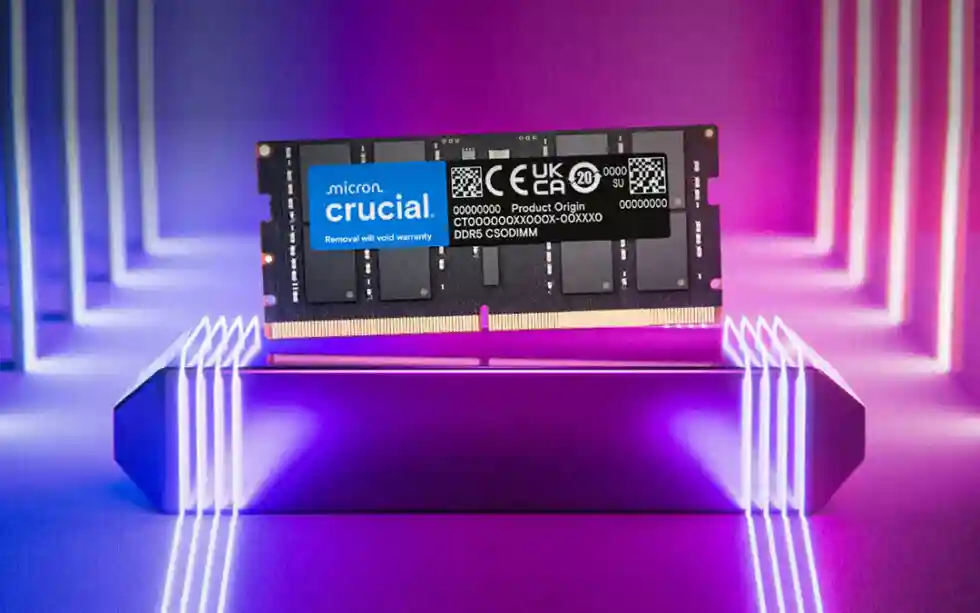
Micron Technology Ends Crucial Consumer RAM Business After 29 Years
On Wednesday, Micron Technology announced that it will exit the consumer RAM business in 2026, ending nearly three decades of selling RAM and SSDs under its Crucial brand. This strategic move is driven by the escalating demand for memory from AI data centers, which has shifted the focus of production away from consumer products to meet the growing needs of enterprise customers. The Crucial brand has been a cornerstone for PC builders and enthusiasts seeking reliable memory upgrades since its launch in 1996.
Sumit Sadana, Micron’s EVP and chief business officer, stated that the surge in AI-driven data center growth has prompted the company to prioritize supply and support for its larger strategic customers. The company plans to continue shipping Crucial consumer products through the end of its fiscal second quarter in February 2026 and will maintain warranty support for existing products. Meanwhile, Micron will continue its enterprise sales with Micron-branded products and aims to redeploy employees affected by the consumer business exit to other company roles.
History of Crucial and Micron’s RAM Manufacturing
Crucial was introduced during the late 1990s Pentium era as Micron’s consumer-facing brand for upgrading PC memory and storage. Over the years, Crucial expanded its product line to include SSDs, flash memory cards, and portable drives, becoming a trusted name in the DIY PC community. Meanwhile, Micron Technology itself has been involved in RAM manufacturing since 1981, building decades of expertise in memory production.
Consumer RAM Market Pressured by AI Infrastructure Demand
This announcement follows a period of rapidly rising memory prices worldwide. For example, a standard 32GB DDR5 RAM kit that once cost approximately $82 in August now sells for about $310, with even higher-capacity kits seeing steeper price hikes. Data shows that DRAM contract prices have soared 171 percent year-over-year, intensifying the challenges for consumer buyers.
The root cause of these price increases is the booming AI infrastructure market, which drives unprecedented demand for high-bandwidth memory (HBM) used in AI accelerators from companies like Nvidia and AMD. As a result, memory manufacturers have shifted their production focus from consumer-grade RAM to these more lucrative enterprise components. Micron, for instance, has already presold its entire HBM production capacity through 2026.
Impact of AI Data Center Expansion on Global RAM Supply
The structural imbalance between AI demand and consumer supply currently shows no sign of relief. OpenAI’s Stargate project alone reportedly accounts for agreements to purchase up to 900,000 DRAM wafers per month, representing almost 40 percent of global production capacity. These vast allocations of memory to AI data centers squeeze the availability for ordinary consumers and channel much of the supply to the enterprise sector.
This shortage is already disrupting market dynamics. For instance, Framework, a laptop maker, stopped selling standalone RAM kits in late November to curb scalping and has indicated that price increases for memory are imminent. For Micron, the enterprise market offers better margins and bulk sales, influencing the difficult decision to leave the consumer market.
Looking Ahead: The End of an Era for DIY PC Builders
Micron’s exit marks a significant change for PC builders and enthusiasts who relied on Crucial as a staple for memory upgrades. Sumit Sadana expressed gratitude to the community and partners who supported Crucial over the years, highlighting the brand’s reputation for quality, reliability, and technical excellence.
Though Crucial will no longer serve the consumer market, Micron remains committed to the enterprise segment, which continues to grow rapidly due to AI and data center demands. For DIY PC builders, this transition means one less contender in the RAM space, which may influence pricing and availability for the foreseeable future.