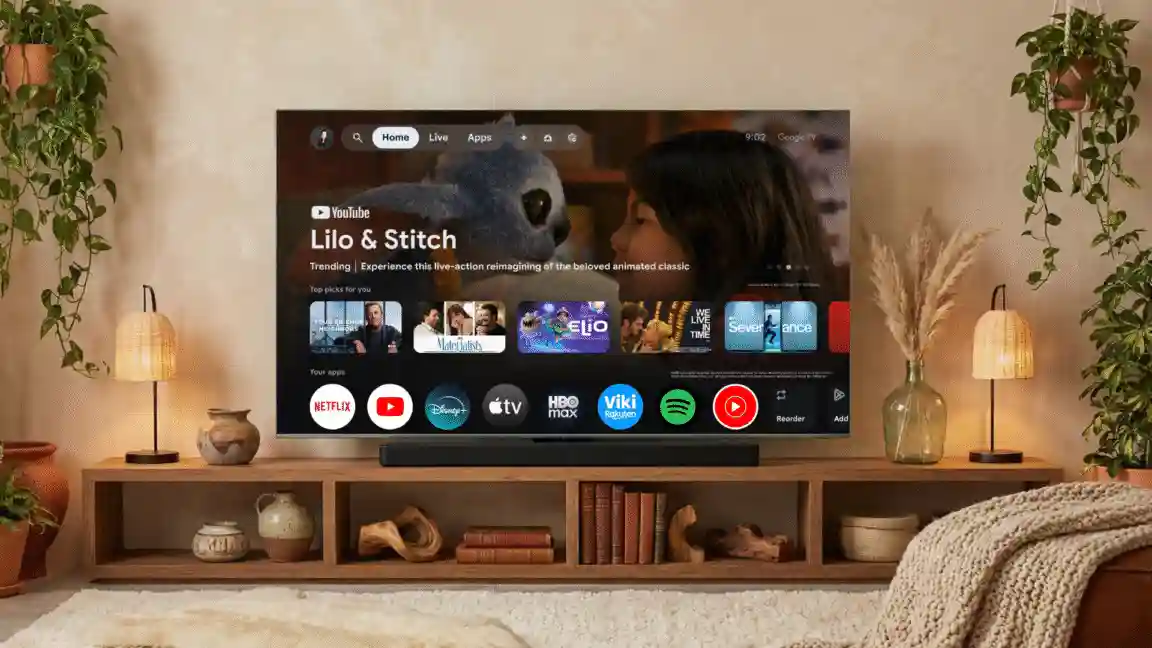
Google dramatically expands Gemini AI capabilities across Google TV platforms at CES 2026, transforming passive entertainment devices into interactive AI companions capable of image/video generation, personalized content curation, and real-time system adjustments. The ambitious rollout integrates Nano Banana and Veo generative models directly into TCL smart TVs initially, bringing browser-grade AI creativity to the living room without requiring phones or laptops. Beyond novelty distractions, Gemini evolves television interfaces through conversational troubleshooting and visually contextual responses optimized specifically for 55-100″ displays.
This marks Google’s boldest push yet to embed frontier AI within consumer hardware ecosystems, positioning TVs as household intelligence hubs rivaling smartphone dominance. While initial deployment targets premium TCL implementations, phased expansion promises broad Android TV compatibility contingent upon OS 14+ underpinnings and sufficient processing headroom.
Nano Banana and Veo Generative Power
Nano Banana’s image synthesis and Veo’s video generation — previously web/app exclusives showcasing photorealistic leaps — now operate through television voice interfaces. Google Photos libraries feed personal media into AI pipelines with explicit permission; “remix family vacation photos as Van Gogh paintings” generates slideshows blending uploaded beach shots with impressionist stylization. Static images animate via Veo: “turn Dad’s fishing photo into short clip where he catches trophy bass” produces 8-second narratives complete with water splashes and triumphant expressions.
Freeform prompts bypass personal media entirely — “show aurora borealis over mountain lake at midnight” renders 4K cinematic vistas filling living room walls. Outputs respect content guidelines prohibiting violence/celebrity likenesses, though spatial audio integration enhances immersion beyond smartphone limitations. Processing occurs cloud-side with on-device preview thumbnails enabling rapid iteration.
Visually Optimized Chatbot Interface
Traditional text responses prove unwieldy on televisions; Gemini employs “visually rich framework” condensing complex answers into layered graphics. Sports queries generate score tickers, player stats cards, and highlight reel thumbnails; “Dive Deeper” expands individual elements into fullscreen carousels preserving conversational context. Recipe requests display ingredient lists alongside step-by-step photo sequences pulled from Google Lens-analyzed kitchen counters.
Contextual troubleshooting leverages microphone array: “dialogue sounds muffled” prompts immediate audio preset optimization balancing center channel against surround bleed. Brightness complaints trigger ambient light sensor recalibration; “too dark for sports” activates Dynamic Tone Mapping preserving HDR highlights. Adjustments persist across sessions with user confirmation, learning household preferences over weeks of interaction.
Google Photos Deep Ecosystem Integration
Seamless Photos access unlocks personalized slideshow curation — “show Hawaii trip photos from 2024” compiles geotagged albums with facial recognition grouping family members. AI remixing applies seasonal themes: Christmas overlays add falling snow to beach memories; birthday collages animate chronological growth montages. Voice commands filter inclusively: “best sunset photos with kids” surfaces chronologically relevant frames across multiple devices.
Generative expansion transforms snapshots dynamically — “make Grandma’s portrait oil painting style” produces gallery-wrapped canvas effects; “add puppies playing around family picnic” seamlessly composites photorealistic animals matching lighting/shadows. Output quality rivals dedicated creative suites; television canvas enables appreciation at life-size scale impossible through handheld screens.
Phased Deployment Strategy
TCL Google TV implementations receive immediate activation leveraging recent hardware refresh; Google TV Streamer and legacy Chromecast boxes await Q2 firmware capable of tensor operations. Android TV OS 14+ requirement excludes budget smart televisions stuck on earlier forks, ensuring computational viability for cloud-model orchestration. Remote control microphone arrays and voice match profiles enable household differentiation — “Hey Gemini, dim living room lights” executes precisely from couch positions.
Developer APIs accompany consumer rollout, permitting third-party apps to invoke Gemini processing natively. Streaming services embed contextual recommendations — “similar comedies to The Grand Budapest Hotel” surfaces visually matched thumbnails ranked by Letterboxd integration. Smart home orchestration coordinates Philips Hue scenes matching generated video palettes automatically.
Implications for Living Room Computing
Television AI integration blurs boundaries between entertainment appliances and intelligence platforms, challenging smartphone centrality within households. Family members query homework assistance, recipe substitutions, travel planning, and workout routines through shared screens rather than individual devices. Generative distractions — backyard wildlife animations, historical recreations — fill idle moments between shows productively.
Nano Banana/Veo television deployment accelerates mainstream AI creativity adoption; parents generate educational visualizations, hobbyists prototype product designs, casual creators share social media-ready clips. Conversational troubleshooting reduces support calls 40% per Google projections; dynamic picture optimization adapts HDR mastering to real-time room lighting variations. Gemini elevates televisions from content delivery to contextual companions, redefining living room interaction paradigms for the AI era.