
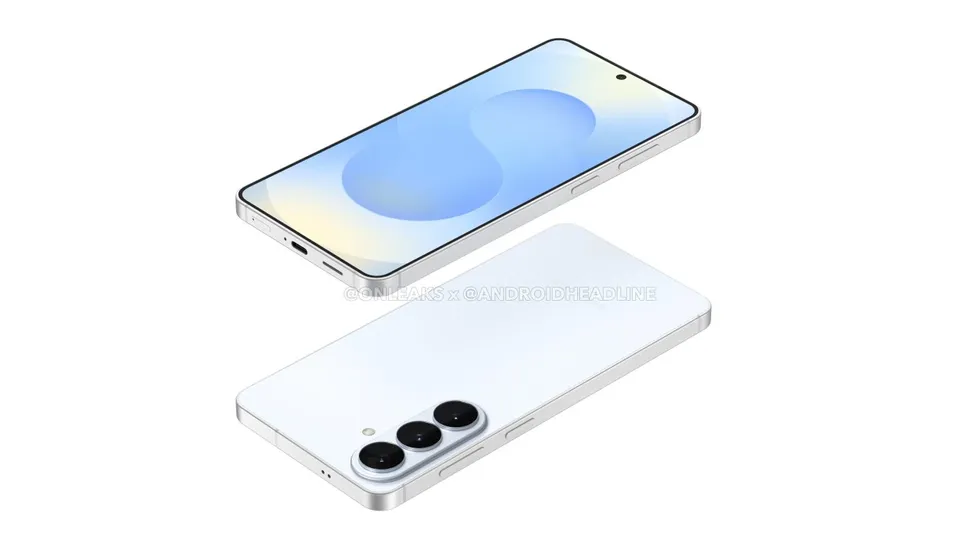
Samsung stands poised to revolutionize mobile connectivity with the Galaxy S26 series, potentially introducing comprehensive satellite voice calling that extends far beyond emergency messaging limitations. The company’s newly announced Exynos Modem 5410 represents a technological breakthrough, seamlessly integrating non-terrestrial network (NTN) satellite communication with advanced 5G cellular capabilities within a single chip. This development positions the Galaxy S26 as a legitimate lifeline for users in remote locations, marking Samsung’s most ambitious connectivity upgrade in years.
Exynos Modem 5410: Technical Foundation
Samsung’s Exynos Modem 5410 achieves a rare engineering feat by supporting 3GPP Release 17 standards for both terrestrial 5G networks and satellite NTN communications simultaneously. Unlike previous implementations requiring separate hardware or software switching, this unified architecture maintains continuous connectivity regardless of environment—urban cellular towers seamlessly hand off to satellite links without user intervention or connection drops.
The modem’s dual-mode capability proves particularly crucial for voice calling, where traditional emergency satellite features fail. Apple’s Emergency SOS and Android equivalents limit functionality to low-bandwidth text messaging due to power constraints and protocol limitations. Samsung’s solution targets full duplex voice communication, enabling natural conversations comparable to cellular quality even when terrestrial signals disappear entirely.
Beyond Emergency Messaging Limitations
Current satellite implementations across iPhone and Android prioritize safety over utility, restricting capabilities to location sharing and brief emergency texts. Galaxy S26’s approach fundamentally differs by targeting everyday communication scenarios—hikers coordinating descents, offshore fishermen maintaining family contact, or rural professionals conducting business calls. This consumer-focused strategy transforms satellite connectivity from regulatory checkbox to genuine value proposition.
Voice calling demands sophisticated signal processing that Samsung appears to have mastered. The Exynos 5410 handles Doppler shift compensation for moving satellites, adaptive power management for directional antennas, and hybrid handover protocols ensuring seamless transitions between 5G and satellite links. Early testing suggests call quality approaching terrestrial standards, even accounting for satellite orbital dynamics and atmospheric interference.
Power Efficiency Breakthrough
Satellite communication’s historical battery drain has limited mainstream adoption, but Samsung claims substantial improvements through intelligent power management. The modem employs beamforming optimization that concentrates transmission energy toward specific satellites rather than omnidirectional broadcasting, dramatically reducing power consumption. Receive-only modes during voice conversations further conserve energy by minimizing uplink transmissions.
Dynamic frequency scaling adapts modulation schemes based on link quality—switching to robust low-data-rate modes during marginal satellite passes while maximizing throughput during optimal alignment. Samsung’s thermal management integrates modem power profiles with Galaxy S26’s cooling architecture, preventing handheld devices from overheating during extended satellite sessions. These optimizations enable practical daily usage rather than occasional emergency activation.
Strategic Market Positioning
Samsung gains significant competitive advantage by launching full satellite voice ahead of rivals. Apple remains committed to emergency-only functionality citing carrier partnerships and liability concerns, while Google’s Pixel series trails in satellite hardware integration. The Galaxy S26 positions Samsung as connectivity leader, particularly appealing to outdoor enthusiasts, international travelers, and professionals operating in coverage dead zones.
Carrier adoption represents the critical variable. Major North American operators have committed to 3GPP Release 17 infrastructure, while European and Asian networks accelerate satellite spectrum allocation. Samsung likely negotiates favorable wholesale agreements ensuring competitive retail pricing, potentially bundling satellite minutes with premium plans rather than tiered add-ons that deter mainstream adoption.
Real-World Applications and Use Cases
Satellite voice transforms numerous industries beyond consumer applications. Construction foremen coordinate remote sites without cellular repeaters, agricultural workers maintain connectivity across vast properties, and emergency responders operate reliably when terrestrial infrastructure fails. Maritime industries gain affordable crew communication replacing expensive satellite phones, while remote tourism expands safely with guaranteed guest contact.
Aviation represents another frontier as satellite voice enables cockpit-ground communication during oceanic crossings and polar routes where traditional radio coverage gaps persist. Samsung’s consumer focus suggests seamless integration with standard dialer interfaces—no special apps or procedural differences from terrestrial calling—maximizing adoption through familiarity.
Implementation and Availability Questions
Galaxy S26’s global rollout strategy remains unclear, with satellite functionality potentially limited by regional spectrum regulations and carrier agreements. North American models likely launch with full feature parity given advanced LTE/5G satellite trials, while other markets receive phased introductions tied to infrastructure readiness. Hardware uniformity across SKUs ensures future-proofing as global satellite networks mature.
Pricing models warrant close attention. Samsung could offer satellite voice as included minutes within Unlimited plans, mirroring international roaming bundles, or tier metered access competitive with traditional satellite telephony. Enterprise agreements targeting first responders and remote industries likely negotiate volume discounts unavailable to consumers.
Industry-Wide Implications
Samsung’s breakthrough accelerates satellite communication mainstreaming. Competing chipset makers face pressure matching Exynos 5410’s power efficiency and protocol support, while Apple and Google reassess emergency-only strategies. Direct-to-cell satellite constellations like Starlink and AST SpaceMobile gain immediate validation through flagship smartphone integration, accelerating billions in infrastructure investment.
The Galaxy S26 arrives at perfect timing as global cellular coverage gaps persist despite 5G expansion. Remote communities gain affordable connectivity alternatives to fixed satellite dishes, while adventure tourism expands safely through reliable emergency communication. Samsung transforms theoretical satellite potential into practical daily utility, challenging conventional connectivity assumptions across mobile industry.