The market for dedicated retro gaming handhelds continues to thrive, driven by enthusiasts seeking portable access to decades of classic video games. In this competitive space, the Retroid Pocket series has carved out a reputation for offering impressive performance at a relatively accessible price point. The announcement of the Retroid Pocket 6 generated significant anticipation, promising to push the boundaries of emulation capability further than its predecessors. However, its journey from announcement to production has been marked by notable community feedback and industry challenges, reflecting the complex dynamics between a hardware creator and its passionate user base. Now, with final product images and gameplay footage released, the device is poised to make its way into the hands of gamers, representing a significant step forward for emulating demanding sixth and seventh-generation consoles on a portable form factor.
Powerful Specifications for Demanding Emulation
At the heart of the Retroid Pocket 6’s appeal is its substantial hardware, engineered to handle systems that have historically pushed the limits of mobile emulation. It is powered by a Qualcomm Snapdragon 8 Gen 2 processor, a chipset that brings flagship smartphone performance to a dedicated gaming device. This is paired with up to 12GB of LPDDR5X RAM and up to 256GB of internal UFS 4.0 storage, which is also expandable via a microSD (TF) card slot. This combination of components is specifically targeted at smoothly emulating consoles like the PlayStation 2, GameCube, Wii, and even venturing into the complex realm of Nintendo Switch and PlayStation 3 emulation. While performance for these latter systems will vary greatly on a per-game basis and through ongoing software development, the hardware foundation is among the most powerful currently available in a dedicated retro handheld. This positions the Retroid Pocket 6 not just as an incremental update, but as a generational leap for players wanting to consolidate their classic gaming libraries into a single, portable device.
Evolving Design in Response to Community Feedback
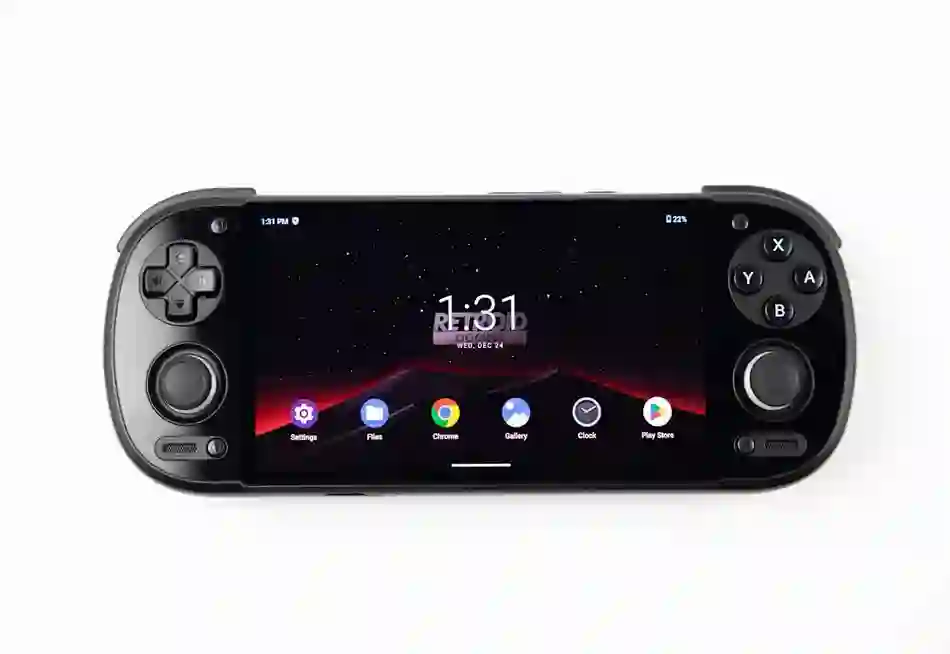
The development cycle of the Retroid Pocket 6 highlighted the growing influence of community feedback in niche hardware markets. Initial renders of the device featured a symmetrical layout with thumbsticks positioned at the top of both the left and right sides. This design choice sparked considerable debate among prospective buyers, many of whom—particularly those focused on retro games from the 8-bit to 32-bit eras—strongly prefer a traditional directional pad (D-pad) in the primary position for precision input. In a notable and responsive move, Retroid announced a revision: customers would be given a choice between the original symmetrical thumbstick layout and an asymmetrical layout that places a D-pad at the top-left. This last-minute design pivot demonstrates a manufacturer listening closely to its core audience, acknowledging that control ergonomics are deeply personal and critical to the user experience, especially for games designed before analog sticks were standard.
Navigating Market Challenges and Pricing Adjustments
The path to launch was further complicated by external market pressures. Retroid initially offered the handheld at an “early bird” discount price of $209. However, citing a widespread global shortage of memory components, the company made the decision to cut this promotional period short in late December, raising the price to its full retail point of $229 sooner than originally planned. While price increases are never welcome, this move reflects the real-world volatility in the electronics supply chain, particularly for smaller manufacturers without the bulk purchasing power of major tech firms. The adjusted pricing still positions the Retroid Pocket 6 competitively within the high-performance segment of the retro handheld market, but the incident serves as a reminder of the fragile economics behind these passion-driven products.
Final Product and Anticipated Release
Despite the developmental twists, Retroid has moved forward into production. The recently released final product shots showcase the handheld in “Black” and “Retroid Orange” colorways, presenting a sleek, modern aesthetic. More importantly, the company shared brief gameplay videos demonstrating the device running PlayStation 2 titles, providing tangible proof of its core performance promise. According to the company’s website, the first batch of pre-orders is scheduled to begin shipping in January, with a second batch available for pre-order with an estimated shipping window of March. For the community of retro gaming enthusiasts, the arrival of the Retroid Pocket 6 represents more than just a new device; it signifies the ongoing evolution and increasing sophistication of a hobby that celebrates gaming history, powered by modern technology that fits in the palm of your hand.