Meta’s ambitions to open its virtual reality ecosystem to hardware partners have hit an unexpected roadblock. After announcing with great fanfare in 2024 that ASUS and Lenovo would create VR headsets running Meta’s Horizon OS, the company has now confirmed that the program has been “paused.” This move effectively halts the rollout of third-party VR devices and represents a significant shift in Meta’s strategy, as it redefines its focus from virtual reality hardware to AI-driven technologies and smart wearables.
The Promise of a Shared VR Ecosystem
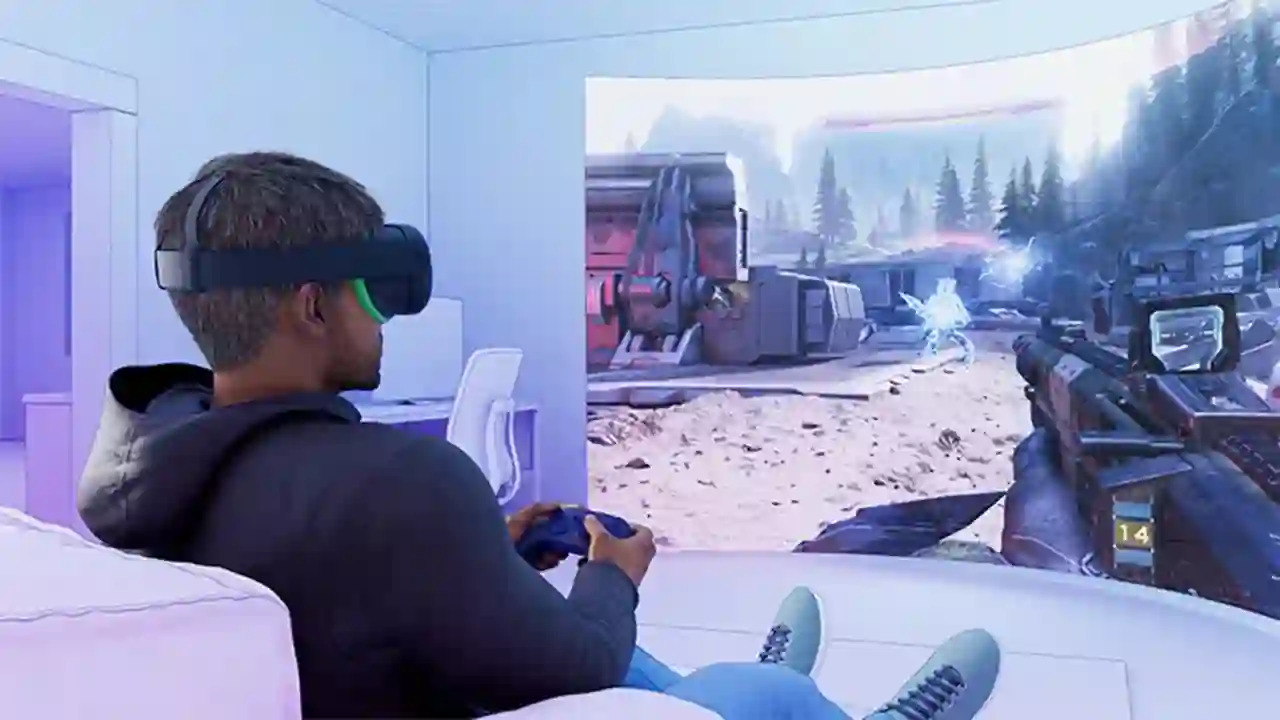
When Meta first unveiled plans to license its Horizon OS to outside manufacturers, it positioned the decision as a major step toward creating an open ecosystem for virtual and mixed reality devices. The strategy mirrored how Google’s Android platform revolutionized smartphones—allowing different hardware makers to customize and innovate on a shared foundation. ASUS was expected to produce a high-performance gaming headset under its Republic of Gamers (ROG) brand, while Lenovo planned a mixed reality design tailored for productivity, learning, and creative applications.
This approach promised diversity in the VR hardware market and signaled Meta’s willingness to collaborate with other tech giants instead of monopolizing the space. For consumers, it suggested the potential for more affordable, specialized, and innovative headsets running a consistent software experience. However, less than a year later, Meta’s decision to pull back illustrates the difficulties of maintaining such partnerships in a rapidly changing market.
Meta Refocuses Its Strategy
In a statement confirming the pause, Meta explained that it would concentrate on “building world-class first-party hardware and software to advance the VR market.” In practice, this means Meta intends to double down on its in-house Quest lineup, while deprioritizing external hardware collaborations that may have diluted its control over the ecosystem. Both ASUS and Lenovo have remained silent in the wake of the announcement, and neither company has revealed prototypes or updates since their original commitments.
The decision follows a broader pattern within Meta’s organization. The company’s 2025 Meta Connect event featured minimal mentions of virtual reality, a sharp contrast to previous years where the “metaverse” dominated every keynote. Instead, the company has shifted its messaging to prioritize augmented reality and artificial intelligence initiatives, especially AI-powered glasses and wearables.
The Decline of the Metaverse Focus
Meta’s founder and CEO Mark Zuckerberg has reportedly been redirecting resources away from full-blown VR projects. According to Bloomberg, substantial budget cuts are targeting the teams responsible for both Horizon Worlds—the company’s social VR platform—and other metaverse-related projects. Insiders suggest that Meta sees more immediate commercial potential in AR and smart glasses technologies, whose real-world applications and accessibility appeal to a far broader consumer base.
Horizon OS, originally conceptualized as a flexible VR platform for both Meta and partner manufacturers, seems to have fallen victim to these strategic reallocations. Rather than continuing to nurture a fledgling partnership program that required significant engineering support and marketing coordination, Meta appears intent on consolidating its ecosystem around flagship devices like the Quest 3 and future AR glasses.
Paused, Not Canceled—For Now
Despite the setback, Meta insists that the door remains open. “We’re committed to this for the long term and will revisit opportunities for 3rd-party device partnerships as the category evolves,” the company stated. The phrasing suggests that Meta has not abandoned the idea entirely, but rather is waiting for market conditions—such as a renewed interest in VR or more robust mixed-reality demand—to justify renewed investments in collaboration.
Still, industry analysts view the pause as a quiet retreat. The development of third-party VR devices comes with complex challenges: differences in hardware performance, competing brand identities, and compatibility requirements that could fragment the software ecosystem. Meta’s hands-on approach with its Quest hardware has allowed it to control quality, user experience, and pricing—advantages that could be jeopardized by opening the platform too early.
ASUS and Lenovo’s Unrealized Potential
The pause also represents a missed opportunity for partners. ASUS’s proposed ROG headset promised to cater directly to gaming enthusiasts with high refresh rates, proprietary cooling systems, and seamless integration with popular PC gaming ecosystems. Lenovo’s concept, designed for enterprise and education, aimed to demonstrate how VR could serve beyond entertainment—embracing classrooms, design studios, and collaborative virtual workspaces. Both projects would have diversified the Horizon OS ecosystem at a time when Meta’s Quest hardware dominated the market.
Without these devices, the competitive landscape in VR remains narrow. Rival platforms like Apple’s Vision Pro or Sony’s PlayStation VR2 may benefit from this slowdown by emphasizing continuity and premium experiences while Meta refocuses its long-term roadmap.
Rebalancing Meta’s Vision
Meta’s shift mirrors a larger transformation in the extended-reality industry. While virtual reality once captured the cultural imagination, growth has slowed as consumers gravitate toward lighter, more practical AR-enabled devices. Smart glasses—particularly those integrating AI-powered assistance—have shown stronger everyday appeal, from language translation to contextual notifications. These emerging trends appear to be where Meta now sees its clearest path to widespread adoption and profitability.
Stepping back from third-party collaborations allows the company to funnel resources into its core technologies and upcoming innovations. This pivot might streamline operations but also raises concerns about Meta’s long-term commitment to truly open VR innovation.
Looking Ahead
For now, the pause on ASUS and Lenovo’s Horizon OS headsets underscores Meta’s uncertainty about virtual reality’s immediate future. The company’s declaration of long-term commitment suggests it still sees potential in VR—but its evolving focus hints that the next generation of immersive experiences may forgo bulky headsets entirely in favor of hybrid AR solutions.
If Meta eventually revives the Horizon OS partnership program, it will likely do so in a more mature mixed-reality market, where experiences blend seamlessly between physical and digital spaces. Until then, the vision of a multi-brand Horizon OS seems to be on indefinite hold, replaced by a renewed pursuit of wearable AI—the next frontier in the company’s ongoing quest to redefine how humans encounter digital worlds.