
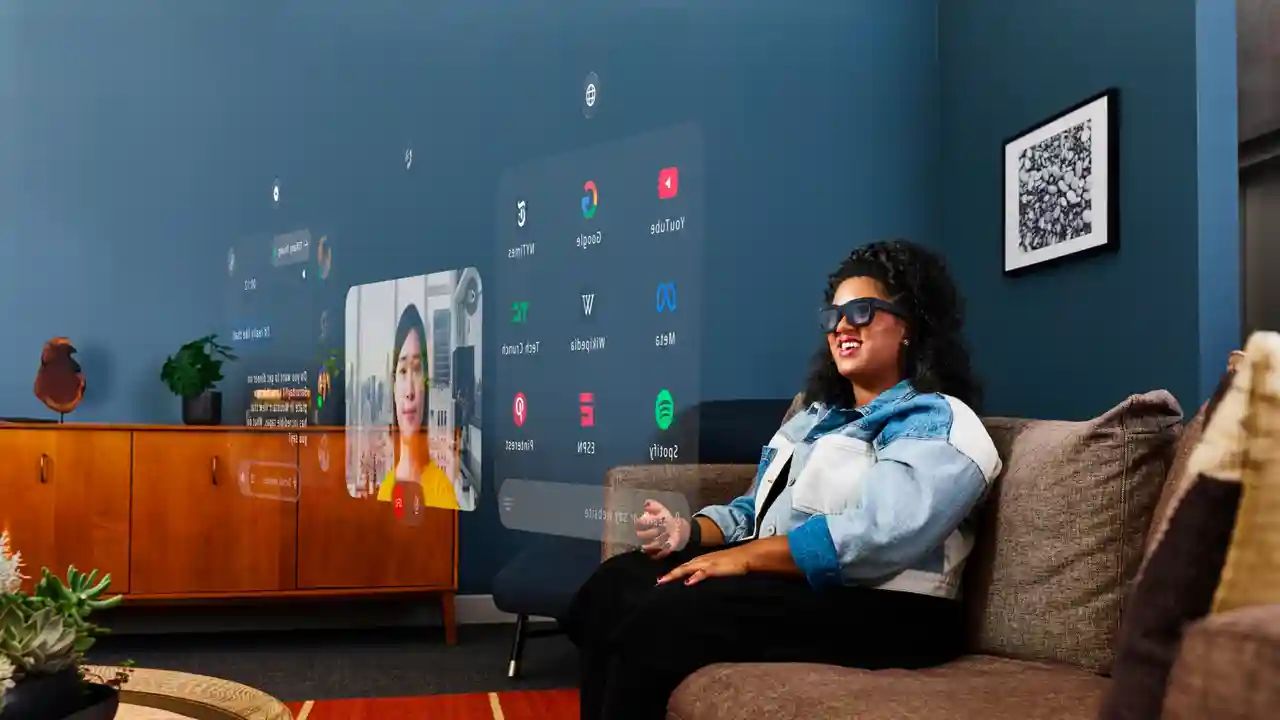
Meta postpones its next-generation mixed reality glasses, codenamed Phoenix, to the first half of 2027, abandoning the late-2026 target originally planned. Internal memos from Reality Labs VP Maher Saba confirm the strategic shift prioritizing polished reliability over rushed deployment. Executives emphasize the extended timeline provides essential breathing room to perfect high-stakes hardware challenging current mixed reality limitations.
Internal Memos Reveal Strategic Delay Rationale
VP Gabriel Aul and Ryan Cairns communicated that the 2027 window enables comprehensive refinement across design, performance, and user experience. This measured approach follows years of aggressive metaverse investment yielding Quest VR dominance but struggling premium wearables. Phoenix represents Meta’s premium mixed reality ambition targeting all-day usability beyond gaming headsets.
The delay aligns with financial discipline after 30% Reality Labs spending cuts. Nearly $16 billion in prior operating losses underscore unsustainable hardware losses despite VR market leadership, necessitating flawless premium executions to justify continued investment.
Phoenix Design: Goggle Form with External Power
Phoenix adopts goggle-like architecture with external puck-shaped battery pack, mirroring Apple Vision Pro’s weight-reduction strategy. This configuration enables power-intensive micro-OLED displays, advanced sensor arrays, and compute demands while minimizing head-borne thermal loads and fatigue.
Mastering microdisplay brightness, waveguide precision, and low-latency passthrough demands extraordinary tolerances. The 2027 horizon allows exhaustive iteration on field-of-view expansion, comfort optimization, and production scalability before consumer launch.
Expanding Beyond Glasses: Malibu 2 and Limitless Acquisition
Parallel development of “Malibu 2” limited edition wearable signals portfolio diversification. Yesterday’s Limitless acquisition—creators of AI Pendant wearable—suggests ambitions beyond traditional glasses and headsets into always-on AI companions.
Pendant’s always-listening AI form factor complements Ray-Ban smart glasses’ camera/audio capabilities, potentially evolving into multimodal ecosystem. Meta builds interconnected wearables spanning capture, computation, and environmental awareness across form factors.
Competitive Landscape and Supply Chain Realities
Apple Vision Pro established mixed reality benchmarks while exposing ergonomic pain points: tethered batteries, weight distribution, and display yields. Global AR/VR shipments remain single-digit millions annually despite Meta’s Quest volume leadership, constraining developer commitment compared to smartphone scale.
Supply constraints plague high-brightness micro-OLED panels and complex waveguide assemblies. Delaying Phoenix leverages anticipated manufacturing maturation, higher component yields, and next-generation silicon efficiency gains essential for mainstream pricing.
Reality Labs Portfolio Evolution Strategy
Meta maintains dual tracks: volume Quest VR headsets drive ecosystem growth while Ray-Ban smart glasses prove unobtrusive daily wearability. Phoenix bridges this divide—immersive beyond sunglasses, wearable unlike bulky VR—targeting professional and consumer productivity scenarios.
Software investments intensify during hardware delays: multimodal AI frameworks, spatial computing OS, hand-tracking refinement, and developer tools. Content ecosystem maturity proves equally critical as physical optimizations for launch success.
2027 Implications for Spatial Computing Race
The extended timeline positions Meta advantageously within maturing component ecosystem. Declining costs, improved yields, and efficiency gains converge by 2027, potentially enabling enthusiast-to-mainstream pricing absent in current generations.
Quest and Ray-Ban sustain platform momentum as Phoenix matures into premium flagship. Strategic patience transforms delay into competitive advantage, prioritizing breakthrough execution over premature market entry in nascent spatial computing category.